How does drinking coffee help your body and your brain?
Are there differences to the health benefits of coffee versus espresso?
Is coffee really good for you – or just okay?
Let’s take a look at the science behind – and in – your cup of coffee.
The Netherlands ranks number 3 in the world’s top coffee consumers, with Finland and Norway at number 1 and 2. Each day 67% of the Dutch drink an average of 3 cups of coffee a day – a massive 6.5 million litres – making that 150 litres per person per year. The biggest group of coffee consumers are the 65+ age group, the smallest are the 16-24 age group. Across all age groups men drink more than women.
The coffee giant Starbucks has 21,000 locations in the world (with about 12,000 of those being in the US) and coffee consumption continues to rise. Global demand is expected to increase by an extra 40-50 million bags of coffee over the next decade which is more than Brazil’s entire yearly production. With the current threats to coffee crops that come with climate change, the world could possibly face a severe coffee shortage.
So what has us all so hooked? Let’s look at the science behind the making of a good cup of coffee as well as its potential health benefits.
The Science Behind a Good Cup of Coffee
 Coffee beans themselves have little to no taste at all. The flavour, the aroma of coffee: it all comes from the roasting process which releases a large number of chemicals from the tiny bean. In fact, the average cup of coffee contains more than 1,000 chemicals. To transfer those delicious chemicals to the hot water in our cup, we run water over those roasted beans. To increase our success, we both grind the beans to increase their surface area (and thus more exposure of those chemicals to the water) and heat the water since higher temperatures (and thus energies) speed up the removal of molecules from a solid.
Lucky for us coffee drinkers, smaller and more water soluble molecules like acids will get extracted first and those tend to be the tastier, less bitter flavours. Coffee drinkers are well aware that not every cup is created equal…
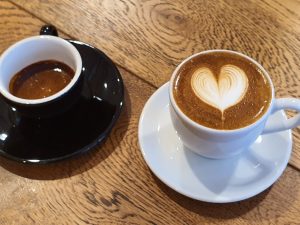
The difference lies not in the beans themselves but in the preparation. For espresso, the beans are very finely ground (almost to the texture of powdered sugar) and the brewing time is much shorter than for regular filter or ‘drip’ coffee. The way to decrease brewing time is to push the water through the ground coffee faster so espresso machines can reach up to 15 atmospheres of pressure to move a cup’s worth of water in less than 30 seconds.
Reasons to Drink Coffee
 The practice of drinking coffee dates as far back as the 15th century. Although the growing the coffee plant likely originated in what is now Yemen, legend has it that the power of coffee was first realised by a goat herder in Ethiopia. The herder noticed that his goats became energised and had trouble sleeping after eating the beans.
Despite our long history with the brew, we are still discovering new additions to the list of benefits of drinking coffee. Here are ways drinking coffee helps your body and your brain:
 1) Coffee lowers the risk of developing Parkinson’s disease: One study showed that drinking 4 to 5 cups of coffee a day cut the risk of developing Parkinson’s Disease in half (compared to drinking little or no caffeine). Another recent study found that drinking coffee actually lessened the effects of Parkinson’s among those who already had it.
2) Coffee offers protection from type 2 diabetes: A study tracking changes in caffeine intake (thus at some level controlling for individual lifestyles) found that those who decreased their coffee consumption by more than one cup per day simultaneously increased their risk of type 2 diabetes by 17%. Those who drink more than three cups of coffee per day reduce their chances by as much as 50%.
3) Coffee lowers rates of depression: A study of more than 50,000 women in the US found that, while all of the participants began the study free of depression, those who drank more than three cups of coffee per day were found to have a 20% lower risk of developing depression later. Studies including other sexes also found a decreased risk of depression but to a lesser degree (around 10% lower risk). Interestingly, other caffeinated beverages, like sodas, are more likely to increase depression rather than combat it.
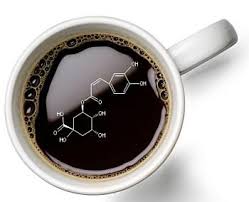 4) Coffee is a great source of antioxidants: Antioxidants help our bodies combat cell damage. While fruits and vegetables are also great sources of antioxidants, studies show that our bodies may absorb them more readily from coffee.
5) Coffee lowers the risk of liver damage: Too much alcohol consumption damages the liver, and can eventually lead to liver cirrhosis and even liver failure. A study of over 125,000 people found that those who drank at least one cup of coffee per day were 20% less likely to develop liver disease.
6) Coffee protects against heart disease: Multiple studies have linked coffee consumption to both reduced risk of coronary heart disease and possibly a moderate reduction in the risk of stroke among women.
Among the nearly 70 different kinds of plants that produce coffee beans, the most popular are Coffea Arabica and Coffea Canephora Robusta. The Arabica beans tend to contain more of the chemicals associated with positive effects on the brain while the Robusta variety usually contain more caffeine and chemicals linked to lowered risks of heart disease and type 2 diabetes.
The Negative Effects of Coffee
Are there any downsides to drinking coffee?
The bitter taste of coffee acts as a warning sign that too much coffee, a kind of alkaloid, is not a good thing. Many alkaloids are toxic, so that bitter taste is our body’s defense mechanism, warning our brain not to consume too much.
 Current recommendations suggest not surpassing 400 milligrams of caffeine per day (about 3 to 5 cups of coffee, depending on your brew of choice). Too much coffee, and thus caffeine, can lead to anxiety, increased heart rate, and a lack of sleep.
The health benefits of coffee can also depend on what you are putting in your daily cup. A 200ml cup of black coffee only contains about two calories but a tablespoon of cream will add another 50 calories. A 16-ounce Starbucks Peppermint White Chocolate Mocha with whipped cream clocks in at over 550 calories, so again, not all cups of coffee are created equal.
Science seems to be telling us that we can drink up guilt free, but as with most things, moderation is likely key.
And now…you know what I’m going to do, don’t you?

REFERENCES:
Dutch coffee statistics (2018)
Coffee consumption demand
Health benefits
A. Ascherio et al. Prospective study of caffeine consumption and risk of Parkinson’s disease in men and women. Ann Neurol. 50(1), 56-63 (2001).
R. Postuma et al.https://www.aan.com/pressroom/home/pressrelease/1096
S. N. Bhupathiraju et al.Changes in coffee intake and subsequent risk of type 2 diabetes: three large cohorts of US men and women. Diabetologia (2014). DOI 10.1007/s00125-014-3235-7.
L. Zheng et al. J. Agriculture Food Chem. (2012).
https://www.acs.org/content/acs/en/pressroom/presspacs/2012/acs-presspac-march-14-2012/why-coffee-drinking-reduces-the-risk-of-type-2-diabetes.html
M. Lucas & F. Mirzaei. Coffee, Caffeine, and Risk of Depression Among Women. Arch Intern Med. 171(17), 1571-1578 (2011). doi:10.1001/archinternmed.2011.393
H. Chen et al.(2013) https://www.aan.com/PressRoom/home/GetDigitalAsset/10430
J. Vinson et al.https://phys.org/news/2005-08-coffee-source-antioxidants.html
L. Klatsky et al.Arch Intern Med. 166, 1190-1195(2006).
J. N. Wu et al.Coffee consumption and risk of coronary heart diseases: a meta-analysis of 21 prospective cohort studies. Int J Cardiol 12, 137(3), 216-225 (2009).
J. M. de Koning Gans et al.Tea and coffee consumption and cardiovascular morbidity and mortality. Arterioscler Thromb Biol. 30(8), 1665-1671 (2010).
E. Lopez-Garcia et al. Coffee consumption and risk of stroke in women. 119(8), 1116-1123 (2009).
C.-L. Ky et al.Caffeine, trigonelline, chlorogenic acids and sucrose diversity in wild Coffea arabica L. and C. canephora P. accessions. Food Chemistry 75(2), 223-230 (2001).