Dreams Infected by Corona
For many of us, living in a COVID-19 world feels as if we have been thrown into an alternative reality. We live day and night inside the same walls. If we venture into town we wear masks, and we get anxious if we pass someone who is not. We have trouble discerning faces. It’s like living in a dream.
COVID-19 has altered our dream worlds, too: how much we dream, how many of our dreams we remember and the nature of our dreams themselves. Early this year, when stay-at-home directives were put in place widely, society quite unexpectedly experienced a dream surge: a global increase in the reporting of vivid, bizarre dreams, many of which are concerned with coronavirus and social distancing. Terms such as coronavirus dreams, lockdown dreams and COVID nightmares emerged on social media. By early April, social and mainstream media outlets had begun broadcasting the message: the world is dreaming about COVID-19.
Although widespread changes in dreaming had been reported in the U.S. following extraordinary events such as the 9/11 attacks in 2001 and the 1989 San Francisco earthquake, a surge of this magnitude had never been documented. This upwelling of dreams is the first to occur globally and the first to happen in the era of social media, which makes dreams readily accessible for immediate study. As a dream “event,” the pandemic is unprecedented.
 But what kind of phenomenon is this, exactly? Why was it happening with such vigour? To find out, Deirdre Barrett, an assistant professor at Harvard University and editor in chief of the journal Dreaming, initiated a COVID-19 dreams survey online in the week of March 22. Erin and Grace Gravley, San Francisco Bay Area artists, launched IDreamofCovid.com, a site archiving and illustrating pandemic dreams. The Twitter account @CovidDreams began operation. Kelly Bulkeley, a psychologist of religion and director of the Sleep and Dream Database, followed with a YouGov survey of 2,477 American adults. Postdoctoral research fellow Elizaveta Solomonova, at McGill University, along with Rebecca Robillard of the Royal’s Institute of Mental Health Research in Ottawa and others, launched a survey to which 968 people aged 12 and older responded, almost all in North America. Results of these inquiries, not yet published in journals but available in preliminary form online, document the precipitous surge, the striking variety of dreams and many related mental health effects.
Bulkeley’s three-day poll revealed that in March, 29 percent of Americans recalled more dreams than usual. Solomonova and Robillard found that 37 percent of people had pandemic dreams, many marked by themes of insufficiently completing tasks (such as losing control of a vehicle) and being threatened by others. Many online posts reflect these findings.
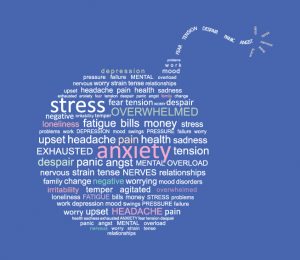 More recent studies found qualitative changes in dream emotions and concerns about health. Dream reports from Brazilian adults in social isolation had high proportions of words related to anger, sadness, contamination and cleanliness. Text mining of accounts of 810 Finnish dreams showed that most word clusters were laden with anxiousness; 55 percent were about the pandemic directly (lack of regard for social distancing, elderly people in trouble), and these emotions were more prevalent among people who felt increased stress during the day. A study of 100 nurses conscripted to treat COVID-19 patients in Wuhan, China, revealed that 45 percent experienced nightmares—twice the lifetime rate among Chinese psychiatric outpatients and many times higher than that among the 5 percent of the general population who have nightmare disorder.
It seems clear that some basic biological and social dynamics may have played a role in this unprecedented opening of the dreamtime floodgates. At least three factors may have triggered or sustained the dream surge: disrupted sleep schedules augmenting the amount of REM sleep and therefore dreaming; threats of contagion and social distancing taxing dreaming’s capacity to regulate emotions; and social and mainstream media amplifying the public’s reaction to the surge.
MORE REM SLEEP, MORE DREAMS
One obvious explanation for the surge is that sleep patterns changed abruptly when lockdowns took effect. Early publications demonstrate elevated levels of insomnia in the Chinese population, especially among front-line workers. In contrast, stay-at-home orders, which removed long commutes to work, improved sleep for many people. Chinese respondents reported an average increase of 46 minutes in bed and an extra 34 minutes in total sleep time. Some 54 percent of people in Finland said they slept more after lockdown. Overall, from March 13 to 27, time asleep in the U.S. increased almost 20 percent nationwide, and states with the longest commute times, such as Maryland and New Jersey, showed the largest increases.
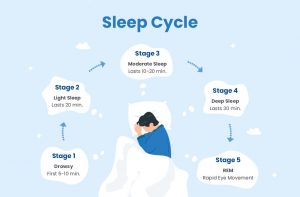 Longer slumber leads to more dreams; people in sleep laboratories who are allowed to snooze more than 9.5 hours recall more dreams than when sleeping a typical eight hours. Sleeping longer also proportionally increases rapid eye movement (REM) sleep, which is when the most vivid and emotional dreams occur.
Relaxed schedules may also have caused dreaming to occur later than usual in the morning, when REM sleep is more prevalent and intense and, thus, dreams are more bizarre. Increased dreaming during late-morning REM intervals results from the convergence of several processes. Sleep itself cycles through deep and light stages about every 90 minutes, but pressure for REM sleep gradually increases as the need for deep, recuperative sleep is progressively satisfied. Meanwhile a circadian process that is tightly linked to our 24-hour core body temperature rhythm gives an abrupt boost to REM sleep propensity late in the sleep period and stays elevated through the morning.
After the pandemic began, many people did sleep longer and later. In China, average weekly bedtime was delayed by 26 minutes but wake-up time by 72 minutes. These values were 41 and 73 minutes in Italy and 30 and 42 minutes among U.S. university students. And without commutes, many people were freer to linger in bed, remembering their dreams. Some early birds may have turned into night owls, who typically have more REM sleep and more frequent nightmares. And as people eliminated whatever sleep debts they may have accrued over days or even weeks of insufficient rest, they were more likely to wake up at night and remember more dreams.
DREAM FUNCTIONS OVERWHELMED
The subject matter of many COVID-19 dreams directly or metaphorically reflects fears about contagion and the challenges of social distancing. Even in normal times, we dream more about novel experiences. For example, people enrolled in programs to rapidly learn French dream more about French. Replaying fragments of experiences is one example of a functional role that researchers widely ascribe to REM sleep and dreaming: it helps us solve problems. Other roles include consolidating the prior day’s events into longer-lasting memories, fitting those events into an ongoing narrative of our lives and helping us regulate emotions.
Researchers have documented countless cases of dreams assisting in creative achievement. Empirical studies also show that REM sleep aids in problem-solving that requires access to wide-ranging memory associations, which may explain why so many dreams in the 2020 surge involve creative or strange attempts to deal with a COVID-19 problem.
Two other widely claimed dream functions are extinguishing fearful memories and simulating social situations. They are related to emotion regulation and help to explain why pandemic threats and social distancing challenges appear so often in surge dreams. Many dreams reported in the media include fearful reactions to infection, finances and social distancing. Threats may take the form of metaphoric imagery such as tsunamis or aliens; zombies are common. Images of insects, spiders and other small creatures are also widely represented.
 One way to understand direct and metaphoric imagery is to consider that dreams express an individual’s core concerns, drawing on memories that are similar in emotional tone but different in subject matter. This contextualisation is clear in post-traumatic nightmares, in which a person’s reaction to a trauma, such as terror during an assault, is depicted as terror in the face of a natural disaster such as a tsunami. The late Ernest Hartmann, a Boston-area dream and nightmare research pioneer who studied dreams after the 9/11 attacks, stipulated that such contextualisation best helps people adapt when it weaves together old and new experiences. Successful integration produces a more stable memory system that is resilient to future traumas.
Metaphoric images can be part of a constructive effort to make sense of disruptive events. A related process is the extinguishing of fear by the creation of new “safety memories.” These possibilities, which I and others have investigated, reflect the fact that memories of fearful events are almost never replayed in their entirety during dreaming. Instead elements of a memory appear piecemeal, as if the original memory has been reduced to basic units. These elements recombine with newer memories and cognitions to create contexts in which metaphors and other unusual juxtapositions of imagery seem incongruous or incompatible with waking life—and, more important, are incompatible with feelings of fear. This creative dreaming produces safety imagery that supersedes and inhibits the original fear memory, helping to assuage distress over time.
This mechanism can break down after severe trauma, however. When this happens, nightmares arise in which the fearful memory is replayed realistically; the creative recombining of memory elements is thwarted. The pandemic’s ultimate impact on a person’s dreams will vary with whether or how severely they are traumatised and how resilient they are.
A second class of theories—also still speculative—may explain social distancing themes, which permeated IDreamofCovid.com reports. Emotions in these dreams range from surprise to discomfort to stress to nightmarish horror. Tweets located by the @CovidDreams account illustrate how incompatible dream scenarios are with social distancing—so incompatible that they often trigger a rare moment of self-awareness and awakening: “We were celebrating something by having a party. And I woke myself up because something wasn’t right because we’re social distancing and not supposed to be having parties.”
These theories focus on dreaming’s social simulation function. The view that dreaming is a neural simulation of reality, analogous to virtual reality, is now widely accepted, and the notion that the simulation of social life is an essential biological function is emerging. In 2000 Anne Germain, now CEO of sleep medicine start-up Noctem proposed that images of characters interacting with the self in dreams could be basic to how dreaming evolved, reflecting attachment relationships essential to the survival of prehistoric groups. The strong interpersonal bonds reiterated during dreaming contribute to stronger group structures that help to organise defenses against predators and cooperation in problem-solving. Such dreams would still have adaptive value today because family and group cohesion remain essential to health and survival. It may be the case that an individual’s concerns about other people are fine-tuned while they are in the simulated presence of those people. Important social relationships and conflicts are portrayed realistically during dreaming.
 Other investigators, such as cognitive neuroscientist Antti Revonsuo of the University of Turku in Finland, have since proposed additional social functions for dreaming: facilitating social perception (who is around me?), social mind reading (what are they thinking?) and the practice of social bonding skills. Another theory advanced by psychology professor Mark Blagrove of Swansea University in Wales further postulates that by sharing dreams, people enhance empathy toward others. The range of dream functions is likely to keep expanding as we learn more about the brain circuits underlying social cognition and the roles REM sleep plays in memory for emotional stimuli, human faces and reactions to social exclusion. Because social distancing is, in effect, an experiment in social isolation at a level never before seen—and is likely antagonistic to human evolution—a clash with deep-rooted dream mechanisms should be evident on a massive scale. And because social distancing disrupts normal relationships so profoundly—causing many of us to spend excessive time with some people and no time with others—social simulations in dreams may play a crucial role in helping families, groups, even societies deal with sudden, widespread social adaptation.
THE ECHO CHAMBER OF SOCIAL MEDIA
There is one basic question about pandemic dreams that need to be nailed down: whether the dream surge was amplified by the media. It is quite possible that early posts of a few dreams were circulated widely online, feeding a pandemic-dreams narrative that went viral, influencing people to recall their dreams, notice COVID themes and share them. This narrative may have even induced people to dream more about the pandemic.
Evidence suggests that mainstream media reporting probably did not trigger the surge but may have amplified its scope, at least temporarily. The Bulkeley and Solomonova-Robillard polls corroborated a clear groundswell in dream tweeting during March, before the first media stories about such dreams appeared; indeed, the earliest stories cited various tweet threads as sources of their reporting.
 Once stories emerged, additional surges in dream reporting through early April were detected by @CovidDreams and IDreamofCovid.com. The format of most early stories almost guaranteed amplification: they typically described some salient dream themes observed in a survey and provided a link directing readers to participate in the same survey. In addition, 56 percent of articles during the first week of stories featured interviews with the same Harvard dream scientist, which may have influenced readers to dream about the themes repeated by her in various interviews.
The surge began to decline steadily in late April, as did the number of mainstream media articles, suggesting that any echo-chamber effect had run its course. The final nature of the surge remains to be seen. Until COVID-19 vaccines or treatments are distributed and with waves of future infections possible, threats of disease and social distancing are likely to persist. Might the pandemic have produced a lasting increase in humanity’s recall of dreams? Could pandemic concerns become permanently woven into dream content? And if so, will such alterations help or hinder people’s long-term adjustments to our postpandemic futures?
Therapists may need to step in to help certain people. The survey information considered in this article does not delve into nightmares in detail. But some health care workers who saw relentless suffering are now themselves suffering with recurrent nightmares. And some patients who endured the ICU for days or weeks suffered from horrific nightmares during that time, which may in part have been the result of medications and sleep deprivation induced by around-the-clock hospital procedures and interminable monitor noises and alarms. These survivors will need expert help to regain normal sleep. Thankfully, there are specialised techniques that are highly effective.
People who are not traumatised but still a little freaked out about their COVID dreams also have options. New technologies such as targeted memory reactivation are providing individuals with more control over their dream narratives. For example, learning how to practice lucid dreaming—becoming aware that you are now dreaming—aided by targeted memory reactivation or other methods could help transform worrisome pandemic dreams into more pleasant, maybe even useful, dreams. Simply observing and reporting pandemic dreams seems to positively impact mental health, as Natália Mota of the Federal University of Rio Grande do Norte in Natal, Brazil, found in her studies.
Short of therapy, we can give ourselves permission to ease up and to enjoy banking those surplus hours of sleep. Dreams can be vexing, but they are also impressionable, malleable and at times inspirational.

 In the study, researchers at Wageningen University & Research in the Netherlands observed 512 participants follow a fixed path through a room where either eight food samples or eight food-scented cotton pads were placed in different locations. When they arrived at a sample, the participants would taste the food or smell the cotton and rate how much they liked it. Four of the food samples were high-calorie, including brownies and potato chips, and the other four, including cherry tomatoes and apples, were low in calories—’diet foods’, you might call them.
 We tend to think of primates such as ourselves as having lost the acute sense of smell seen in many other mammals in favour of sharp eyesight. And to a large degree, we humans have developed that way. But the new findings support the notion that our sniffer is not altogether terrible: These results suggest that human minds continue to house a system optimised for ‘energy‐efficient foraging’ within erratic food habitats of the past. And it highlights the often underestimated capabilities of the human sense of smell.
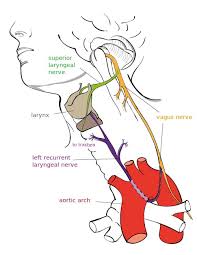 At the top of the spinal column there is a bundle of nerves called the vagus nerve. It activates different organs in the body, for example, the heart, lungs, liver and digestive organs. When activated, it is likely to produce that warm glowing feeling in your chest which you probably recognise from when somebody has done something unexpectedly (nice) for you. There are people who have naturally high vagus nerve activation in a resting state. These people are more likely to generally feel emotions that promote compassion, gratitude, love, happiness and feelings of caretaking. Children with high resting state activation are more cooperative and likely to give. Neuroscientist Stephen Porges has called it the nerve of compassion and has spent years researching into it. It is thought to stimulate certain muscles in the vocal chamber – enabling (compassionate) communication – and it is closely connected to receptor networks for triggering the release of oxytocin.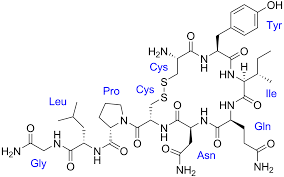
 This is geek speak for doing something kind for another person. And scientists are starting to get enthusiastic about it. There is now mounting evidence that what makes people really happy is doing something for another. It increases a person’s positive emotions and decreases their negative emotions, resulting in them flourishing psychologically (yes, that’s a scientific term). In the Western world, we are so often encouraged to focus on ourselves in order to feel better. This latest stream of research shows that doing something for someone else is a much better way to boost your mood and well-being.
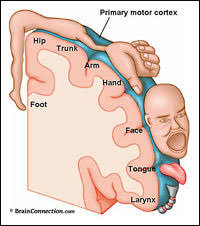 From an evolutionary perspective, our hands appear to be so important that they take up a large chunk of the ‘motor cortex’ of the brain (see diagram). The cortex is the crinkly surface of our brain that makes human brains much bigger than that of other mammals or animals, and which has developed so that we are able to carry out more functions as well as thinking, reasoning and planning. Part of this crinkly cortex is called the motor cortex and it coordinates movements. Our hands are so important that moving them activates a much bigger area in your motor cortex than much larger parts of your body, such as the back or even legs. Your thumb alone takes up more space in the cortex than your entire back!
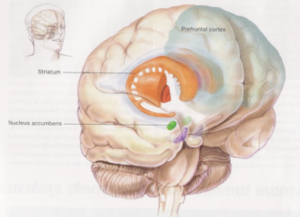 These three brain regions also happen to be the network necessary for effort-driven rewards. It is as if evolution has wired us to derive pleasure and satisfaction from using large areas of our brains through our hands. The more the effort-driven rewards circuit is kept activated, the greater the sense of well-being. You literally buzz. All the regions are networking together. When the buzzing is heightened, the brain cells in those areas are turned on and secrete neurotransmitters dopamine and serotonin, which are involved in generating positive emotions. That makes the whole activity motivating, and makes you eager to do it again soon so that you can keep on feeling good. Furthermore, neural connections are strengthened – or as neuroscientists say ‘neurons that fire together, wire together’ – and with this type of meaningful activity new brain cells are then produced. This last factor is believed to be an important aspect of recovering from depression.
 Schlegel’s empirical research backs up what existentialist philosophers like Jean-Paul Sartre and great humanistic psychologists like Carl Rogers and Abraham Maslow proposed decades ago: There is inherent value in being able to live authentically and express oneself. It makes our lives feel truly worth living.
 This theoretical insight is backed up by recent research within self-determination theory. This has argued forcefully that autonomy is a fundamental human need. The satisfaction of this vitally important for our psychological growth, integrity and well-being. Just as our body needs food and water for its wellness and health, our mind needs a few basic psychosocial experiences for its wellness and health—and among these needs autonomy stands tall. As self-determination theory is currently the most studied theory of motivation within psychology, there are literally hundreds of studies demonstrating the importance of autonomy for human well-being in various areas of life ranging from educational outcomes and work engagement to sport performance and dental hygiene. Yep, the health of your teeth can depend on how meaningful your life is to you.
 Given that the need for autonomy is built into the human motivational system, it is no wonder we find something inherently worthy and fulfilling in being able to live authentically. Basic psychological needs provide a robust foundation for where to find meaning in life. And what applies to whole lives is true also for individual tasks. Hong Zhang from Nanjing University demonstrated that how much autonomy people perceive in trying to achieve goals is connected to how meaningful they experienced the goal to be. It’s logical then that having autonomy at work is one of the key qualities that makes work meaningful.
 So, can I be a bit bossy and give you some homework? ;=)
 There’ve also been scientific studies using a variety of approaches to back up this anecdotal evidence. One of the first was a study led by Dr. Rachel Herz at Brown University in 2004. Herz and her collaborators found that a group of five women showed more brain activity when smelling a perfume with which they associated a positive memory than when smelling a control perfume they had never before smelled. The brain activity associated with the memorable perfume was also greater than that produced by the visual cue of seeing the bottle of perfume.
 The process through which molecules in the air are converted by our brain into what we interpret as smells and the mechanisms our brain uses to categorise and interpret those odours is, as you have probably guessed, a complicated one. In fact, the process is so complicated that the Nobel Prize in Physiology or Medicine was awarded in 2004 to the researchers Richard Axel and Linda Buck for their work in decoding it.
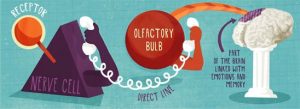 processing emotion) and to your hippocampus (an area linked to memory and cognition). Neuroscientists have suggested that this close physical connection between the regions of the brain linked to memory, emotion, and our sense of smell may explain why our brain learns to associate smells with certain emotional memories.
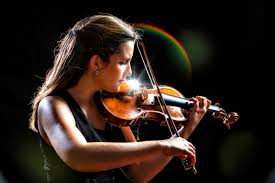 In the study, a violinist performed brief excerpts from a dozen different compositions, which were videotaped and later played back to a listener. Researchers tracked changes in local brain activity by measuring levels of oxygenated blood. (More oxygen suggests greater activity, because the body works to keep active neurons supplied with it.) Musical performances caused increases in oxygenated blood flow to areas of the brain related to understanding patterns, interpersonal intentions and expression.
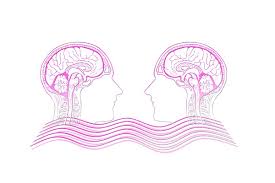 All the musical pieces resulted in synchronisation of brain activity between the musician and listener, but this was especially true of the more popular performances. Interbrain coherence – the connection between the brains – was insignificant during the early part of each piece and greatest toward its end. The authors explained that the listener required time to initially understand the musical pattern and was later able to enjoy the performance because it matched that person’s expectations.
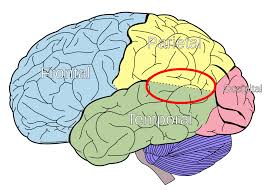 Synchronous brain activity was localised in the left hemisphere of the brain, to an area known as the temporal-parietal junction (red circle in the picture). This area is important for empathy, the understanding of others’ thoughts and intentions, and verbal working memory used for expressing thought. It may function in the retrieval of sounds and patterns that give rise to musical expectations.
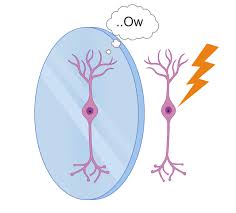 Mirror neurons both control movement and respond to the sight of it, giving rise to the notion that their activity during passive observation is a silent rehearsal for when they become engaged in active movement. They were once thought to be a biological substrate for mimicry and, more importantly, empathy—the source of our understanding of the actions and intentions of others. Mirror neurons have been implicated (rightly or wrongly) in everything from autism to substance abuse. Nevertheless, nerves that control movement are generally involved in perception as well. And this arrangement is especially true of music, in which physical movement emphasises melodic gesture or follows a rhythmic beat. Indeed, the auditory cortex enlists other regions of the brain that control movement, showing an innate connection between movement and our understanding of music. No wonder you and your fellow concertgoers dance and move to the music. It is your way of comprehending the music and participating in the encounter.
 Because music is a group endeavour, it is often used as the context to study coordinated brain function. Synchronised brain responses among music listeners have been measured by functional magnetic resonance imaging (fMRI) in some studies, while other researchers have examined the coordinated actions of performers by tracking the electrical activities of their brain using electroencephalography (EEG). Rather than examine the relationship among groups of performers or groups of listeners, the new NeuroImage study examined the relationship between an audience and a performer. And it not only followed the degree of concordance in brain activity among these individuals during a musical encounter but also examined how that concordance was related to musical enjoyment. The brain activity of that person playing air guitar at your concert (oh no – someone realy was watching me!) is closer to that of a true performer than you might have realised.
 It is remarkable that the observed degree of synchronisation between the performer and audience was connected to enjoyment of the music. Such pleasure could provide a powerful means by which music promotes positive social behaviour. The pleasantness of music has been attributed to synchronisation of electrical activity in the right hemisphere of the brain. Music commands greater attention when it is pleasant, which could contribute to one’s feeling of being swept away when listening to a favorite piece. While the authors of the NeuroImage paper suggest that the audience’s enjoyment was linked to the music matching pattern expectations, other studies have shown that surprise is associated with the greatest degree of musical pleasure. Remarkably, even sad music can bring great enjoyment. For example, Mimì’s illness and death in the opera La Bohème is filled with tragic sadness, endless regrets and lost opportunities for redemption, but the music ultimately leads the audience to a bittersweet sense of transcendence.
 Whether encountered as a sole listener of a recorded artist or as part of a packed audience before a full orchestra, music is a shared experience that integrates our intellect, emotions and physical movements. We tap to the beat together and sway in unison to a melody. The experience challenges our cognition to recognise patterns and excites us with pleasure when it surprises us. And we can even enjoy its expression of sadness. Music unites these processes within us and among and between audiences and performers.
 One gene, in particular, caught their eye. ALK – or the gene for anaplastic lymphoma kinase – is a stretch of DNA whose mutant form has been associated with human cancers. But its normal normal function had never been established.


 In the initial experiment, the researchers asked 16 right-handed subjects to determine where they felt touches on a one-meter-long wooden rod. In a total of 400 trials, each subject compared the locations of two touches made on the rod: If they were felt in different locations, participants did not respond. If they were in the same location, the people in the study tapped a foot pedal to indicate whether the touches were close or far from their hand. Even without any experience with the rod or feedback on their performance, the participants were, on average, 96 percent accurate.
 When the team tested some of the same subjects with touches on their arm instead of the rod, it observed similar repetition suppression in the same brain regions on similar time scales. The somatosensory cortex was suppressed in 52 milliseconds (about one twentieth of a second) after contact on both the rod and the arm. At 80 milliseconds, that activity suppression spread throughout the posterior parietal cortex. These results indicate the neural mechanisms for detecting touch location on tools are remarkably similar to what happens to localise touch on your own body.
 The vibrations on the rod may provide the key information needed for touch localisation. Repeating the same rod experiment, the researchers tested a patient who lost proprioception in her right arm, meaning she could not sense the limb’s location in space. She could still sense superficial touch, however, and she was able to localise where the rod was touched when held in both hands and had similar brain activity as the healthy patients during the task. That finding suggests quite convincingly that vibration conveyed through the touch, which is spared in the patient, is sufficient for the brain to locate touches on the rod.
 The result was striking. In people who had been to their in-laws, there was a decrease in all types of the Ruminococcus species of bacteria in the intestines. It is believed that this type of bacteria has protects against depression and psychological stress. The lower levels following the Christmas visit suggest that the bacteria were ‘used up’ in trying to buffer the person against the in-laws.
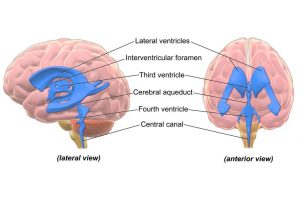 The team measured this CSF inflow going into the fourth ventricle, one of four fluid-filled cavities involved in producing CSF (by filtering blood plasma) and circulating it around the brain. As CSF usually flows out of the fourth ventricle, this suggests a “pulsatile” flow, like a wave. This pushes CSF around the ventricles and into spaces between membranes surrounding the brain and spinal cord, called the meninges, where it mixes with “interstitial fluid” within the brain to carry away toxic waste products.