DOWNLOAD THE ENTIRE OCTOBER 2017 NEWSLETTER including this month’s Freebie.
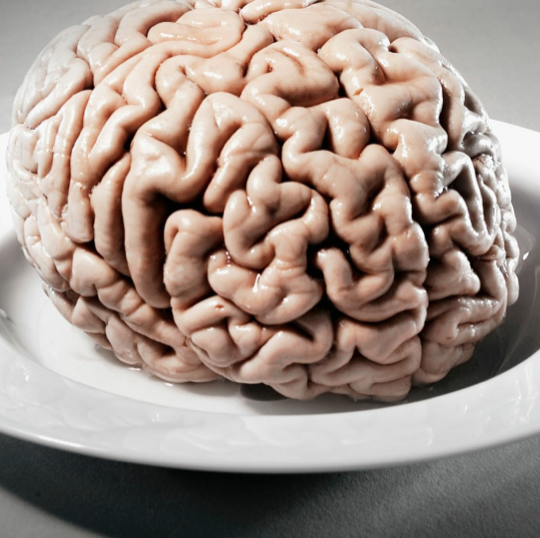 In the 1960s, a surgical technique to reduce stomach size (called bariatric surgery) was introduced to help obese patients lose weight. Doctors considered this primarily a mechanical fix. A smaller stomach, the reasoning went, simply cannot hold and process as much food. Patients get full faster, eat less and therefore lose weight.
This idea is in part true. But now scientists know that it is not nearly that simple. Recent science has revealed that appetite, metabolism and weight are regulated through a complex dialogue between bowel and brain—one in which mechanical influences, hormones, bile acids and even the microbes living in our gut all interact with labyrinthine neurocircuitry. Bariatric surgery, scientists are discovering, engages and may change all these systems. In the process, it is helping researchers map how this complicated interplay manipulates our eating behaviours, cravings and frenzied search for calories during starvation. This work could also reveal new targets—including microbes and possibly the brain itself— that render the risky surgical procedure obsolete altogether.
Brain Meets Bowel
We have all felt the physical effects of the gut-brain communion: the gastric butterflies that come with love, the rumbles that arise before delivering a speech. These manifestations result from the brain signaling to the gastrointestinal tract, both through hormones and neuronal signals.
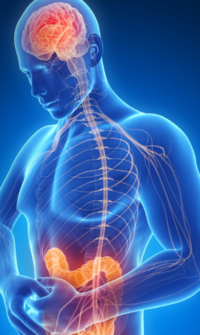
Conversely, the gut can send signals back to the brain, too. In fact, coursing through our abdomen is the enteric nervous system, colloquially known as the second brain. This neural network helps to control food digestion and propulsion through the 30 feet of our gastrointestinal tract. It also communicates directly with the brain through the vagus nerve, which connects the brain with many of our major organs.
Two primary gut-brain pathways regulate appetite. Both systems involve a small, central brain region called the hypothalamus, a hotbed of hormone production that helps to monitor numerous bodily processes.

The first system comes into play during fasting. The stomach secretes the hormone ghrelin, which stimulates a region within the hypothalamus called the arcuate nucleus. This structure then releases neuropeptide Y, a neurotransmitter that, in turn, revs up appetite centers in the cerebral cortex, the outer folds of the brain, driving us to seek out food. In anticipation of mealtime, our brain sends a signal to the stomach via the vagus nerve, readying it for digestion. This can occur simply at the sight, smell or thought of food as our brain prepares our body for a meal.
The second gut-brain pathway suppresses our appetite. As we eat, several other hormones, including leptin and insulin, are secreted from fat tissue, the pancreas and the gastrointestinal tract. Separately, these hormones play many roles in digestion and metabolism. Acting together, they signal to another area of the hypothalamus that we are getting full. Our brain tells us to stop eating.
The appetite and satiety loop constantly hums along. Yet hunger pathways also interact with brain regions such as the amygdala, involved in emotion, and the hippocampus, the brain’s memory centre. Hence, our “gut feelings” and “comfort foods” are driven more by moods than mealtimes and nostalgic recollections of Grandma’s apple pie. As a result of higher thinking processes, food now has context. Food is culture. As playwright George Bernard Shaw put it, “There is no sincerer love than the love of food.”
 Then there is the hedonistic thrill of sitting down to a meal. Eating also lights up our reward circuitry, pushing us to eat for pleasure independent of energy needs. It is this arm of the gut-brain axis that many scientists feel contributes to obesity.
Neuroimaging work confirms that, much like sex, drugs, gambling and other vices, food can cause a surge of dopamine release in the brain’s reward circuitry. This neurotransmitter’s activity serves as a powerful motivator, one that can reinforce dining for its own sake rather than just bodily survival. Researchers have found that for rats, sweetness surpasses even cocaine in its desirability. In humans, psychiatrist Nora Volkow, director of the National Institute on Drug Abuse, has confirmed what chocolate lovers everywhere already know: food’s effects on the reward system can override fullness and motivate us to keep eating. Such findings hint at a neurobiological overlap between addiction and overeating, although whether eating can be an outright addiction remains a controversial question.
The Surgical Solution
Thanks to the flow of messenger hormones and neurotransmitters, our mind and stomach are in constant communication. Disrupting this conversation, as bariatric procedures must do, will therefore have consequences.
Research has shown that in the days and weeks after bariatric surgery, sugary, fatty and salty foods become less palatable. One study, published in 2010 by Louisiana State University neurobiologist Hans-Rudolf Berthoud, found that rats lost their preference for a high-fat diet following gastric bypass surgery. In the 1990s multiple research teams had reported that after such surgery, patients often lose the desire to consume sweet and salty foods. More recently, a 2012 study by a team at Brown University found that adult patients had significantly reduced cravings for sweets and fast food following bariatric surgery. Similar findings in adolescent surgery patients also appeared in a 2015 study.
The alteration in cravings and taste may be caused by changes in the release and reception of neurotransmitters throughout the gut-brain system. In 2016 Berthoud and his colleagues found that in the short term—around 10 days postprocedure—bariatric surgery in mice caused additional meal-induced neural activity in brain regions known to communicate with the gut compared with brain activity before the surgery. Specifically, the boost in activity was seen in a connection leading from stomach-sensing neurons in the brain stem to the lateral parabrachial nucleus, part of the brain’s reward system, as well as the amygdala.
An expert in this area is biochemist Richard Palmiter of the University of Wash-ington. In a 2013 study published in Nature, Palmiter’s group used complex genetic and cell-stimulation techniques — including optogenetics, a means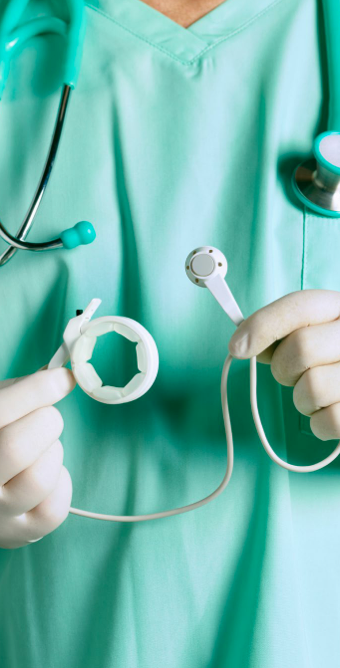 of controlling living tissue using light—to activate or silence specific neurons in the brain stem parabrachial nucleus pathway in mice. He found that engaging this circuit strongly reduced food intake. But deactivating it left the brain insensitive to the cocktail of hormones that typically signaled satiety—such that mice would keep eating.
Palmiter’s work suggests that engagement of the brain stem parabrachial pathway helps us curb our appetite. Because it is this same pathway that becomes unusually active postsurgery, it is probable that the hyperactivation Berthoud discovered is part of the gut-brain’s effort to assess satisfaction postsurgery. The brain must relearn how to be satisfied with smaller portions.
In other words, bariatric surgery is certainly a mechanical change: with less space, the body needs to adjust. Still, there is clearly more to the story. After the procedure, more undigested food may reach the intestine, and, Berthoud speculates, it would then trigger a hormonal response that alerts the brain to reduce food intake. In the process, it would alter the brain’s activity in response to eating. If he is correct, the surgery’s success—at least in the short term—may have as much to do with its effects on the gut-brain axis as it does on the size of a person’s stomach.
The Microbial Mind
There is another player in the complex communications of mind and gut that might explain bariatric surgery’s effects. Experts have implicated the microbiota—the trillions of single-celled organisms bustling about our digestive system—in countless disorders, including many that affect the brain. Our codenizens and their genome, the “microbiome,” are thought to contribute to autism, multiple sclerosis, depression and schizophrenia by communicating with the brain either indirectly via hormones and the immune system or directly through the vagus nerve.
Research by gastroenterologist Lee Kaplan, director of the Massachusetts General Hospital Weight Center, suggests that the microbiota may play a role in obesity. In a study published in 2013 in Science Translational Medicine, Kaplan and his colleagues transferred the gut microbiota from mice that had undergone gastric bypass surgery to those that had not. Whereas the surgery group lost nearly 30 percent of their body weight, the transplanted mice lost a still significant 5 percent of their body weight. (Meanwhile a control group that did not have surgery experienced no significant weight change.) The fact that rodents could lose weight without surgery, simply by receiving microbes from their postoperative fellows, suggests that these microbial populations may be at least partly responsible for the effectiveness of bariatric procedures.
 A similar study, published in 2015 by biologist Fredrik Bäckhed of the University of Gothenburg in Sweden, found that two types of bariatric surgery—the Rouxen-Y gastric bypass and vertical banded gastroplasty—resulted in enduring changes in the human gut microbiota. These changes could be explained by multiple factors, including altered dietary patterns after surgery; acidity levels in the gastrointestinal tract; and the fact that the bypass procedure causes undigested food and bile (the swamp-green digestive fluid secreted by the liver) to enter the gut farther down the intestines.
As part of the same research, Bäckhed and his colleagues fed mice microbiota samples from obese human patients who either had or had not undergone surgery. All the rodents gained varying degrees of body fat, but mice colonised with postsurgical microbiota samples gained 43 percent less.
How might changes in our gut’s flora alter their interactions with the gut-brain axis and affect weight? Although the answer is still unclear, there are a few promising leads.
Specific gut microbial populations can trigger hormonal and neuronal signaling to the brain such that they influence the development of neural circuits involved in motor control and anxiety. Bäckhed suspects gut flora after bariatric surgery could have a comparable effect on brain regions associated with cravings and appetite.
The neurotransmitter serotonin could play a special role as well. About 90 percent of our body’s serotonin is produced in the gut, and in 2015 researchers at the California Institute of Technology reported that at least some of that production relies on microbes. Change the microbes; change the serotonin production. And that could make quite a difference because, as numerous studies have confirmed, stimulating the brain’s serotonin receptors can significantly reduce weight gain in rodents and humans.
Treating the Gut-Brain Axis
It is a welcome turn of fate that bariatric surgery is illuminating new directions in treating obesity—which affects more than 600 million people worldwide. Some of these avenues could render surgery obsolete or at least reserved for the most extreme cases. Thus, at the forefront of battling excess weight may be hijacking the gut-brain axis.
In 2015, for example, the U.S. Food and Drug Administration approved a device that stimulates the vagus nerve to quell food cravings. A surgeon implants the device, made up of an electrical pulse generator and electrodes, in the abdomen so that it can deliver electric current to the vagus nerve. Although precisely how it works is unknown, the study leading to its approval found that patients treated for one year with this tool lost 8.5 percent more of their excess weight than those without the device.
That approach offers some patients a less invasive alternative to bariatric surgery, but for the moment, vagus nerve stimulators are not as effective as many other obesity therapies. Meanwhile a number of intrepid neurosurgeons are investigating the use of a technique called deep-brain stimulation. Approved for use in Parkinson’s disease and obsessive-compulsive disorder, the procedure involves stimulating specific brain regions using implanted electrodes. Although this research is in its infancy, numerous brain regions involved in appetite control are being explored as possible targets.
 The Mayo Clinic believes that in the future the best approach to treating obesity will be highly personalised. They consider obesity to be a disease of the gut-brain axis in which the part of the axis which is abnormal needs to be identified in each patient in order to personalise treatment.
In 2015 Acosta Cardenas from The Mayo Clinic and his colleagues looked at numerous factors potentially related to obesity in more than 500 normal-weight, overweight and obese patients. Among the factors were how quickly the study subjects got full, how quickly their stomachs emptied, hormone levels in response to eating and psychological traits. Acosta Cardenas’s findings support the idea that there are clear subclasses of obesity and that the cause and ideal treatment of obesity is most likely unique to each patient. For example, 14 percent of the obese individuals in his study have a behavioural or emotional component that would steer his treatment recommendation away from surgery and medication and toward behavioural therapy. He can also foresee a future in which he might prescribe a probiotic or antibiotic for obesity patients with an abnormal microbiota.
REFERENCES
■ Conserved Shifts in the Gut Microbiota Due to Gastric Bypass Reduce Host Weight and Adiposity. Alice P. Liou et al. in Science Translational Medicine, Vol. 5, No. 178, Article 178ra41; March 2013.
■ Roux-en-Y Gastric Bypass and Vertical Banded Gastroplasty Induce Long-Term Changes on the Human Gut Microbiome Contributing to Fat Mass Regulation. Valentina Tremaroli et al. in Cell Metabolism, Vol. 22, pages 228–238; August 4, 2015.
■ Eating in Mice with Gastric Bypass Surgery Causes Exaggerated Activation of Brainstem Anorexia Circuit. Michael B. Mumphrey et al. in International Journal of Obesity, Vol. 40, No. 6, pages 921–928; June 2016.
■ Mind Over Meal. B. Stetka in Scientific American Mind, July/August 2017, pages 27-33.
■ Are Microorganisms Making You Moody?
https://jaynejubb.com/november2012article.htm