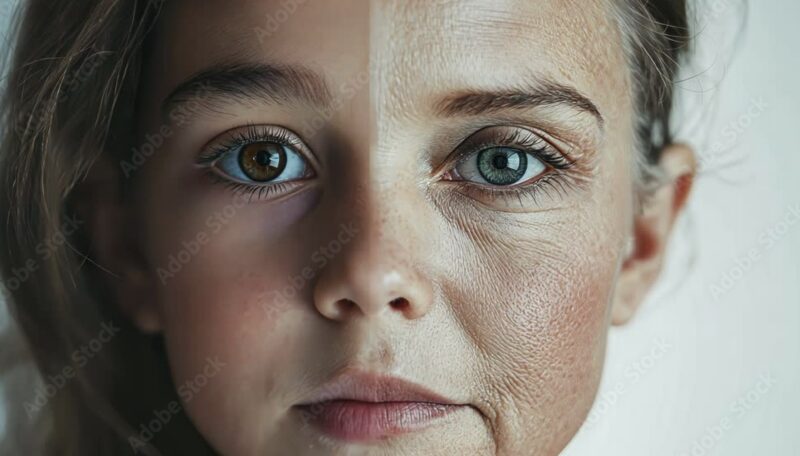
As we get older, one of the quiet frustrations is how early memories begin to blur. The vivid details of the never-ending summer holidays or the magical white Christmases can fade and melt like the ice-cream on that summer day…That leaves us wondering whether there’s a way to somehow bring them back.
Scientists call these recollections of personal life events autobiographical episodic memories—the mental time‑travel that lets us re‑experience what we once saw, heard, tasted, touched, smelled, and felt. But memories aren’t just about the world around us; they’re also tied to the bodies we inhabited at the time. With every moment, the brain receives a constant stream of sensory signals from the body. In theory, our memories should encode not only what happened but who we physically were when it happened. Surprisingly, this connection has barely been studied.
A team of neuroscientists lead by Jane Aspell, wondered whether tapping into this brain‑body link could help people access long‑lost memories—by briefly putting them “back inside” their younger selves. In a new experiment, they found that altering someone’s sense of their own body can unlock memories from specific periods of life. A subtle illusion—showing people a childlike version of their own face that moved exactly as they did, like a mirror—made early memories more vivid.
The brain constantly tracks the body, building internal maps of its shape, position, and state. This mental model, known as the bodily self, was once thought to be stable. But research shows it’s surprisingly flexible. When the brain receives conflicting sensory information, it can be tricked into updating its sense of the body. Classic illusions, like the rubber hand illusion (see references), show how easily ownership can shift. Virtual reality takes this further, allowing people to feel as though they inhabit an entirely different body. The enfacement illusion can even make another face feel like one’s own.
These illusions reveal that our bodily self is not fixed—it can be reshaped, at least temporarily, by changing what the brain perceives.
In the study, the researchers used this malleability to make people feel younger. Fifty adults took part in an online experiment where they saw a real‑time video of their face. Half saw their unaltered appearance; the other half saw a younger, childlike version created with an image filter. When participants moved their heads and saw the younger face move in perfect sync, many felt a strong sense of ownership over that younger version.
Afterward, participants recalled childhood and recent memories in detail. Independent raters, unaware of which condition each person experienced, scored the vividness of these recollections. People who saw the younger face retrieved significantly richer childhood memories—more sensory details, more emotion, more specificity. The effect didn’t extend to recent memories, suggesting the illusion taps into a deep link between body representation and memories formed long ago.
These findings suggest that the brain doesn’t store memories as isolated sensory fragments. Instead, it anchors them to the body we had when those memories were formed. The bodily self isn’t just background—it’s part of the structure of memory itself.
Beyond being a fascinating trick, this work hints at new possibilities. If early memories are tied to how we once perceived our bodies, then carefully designed illusions or sensory interventions might one day help people who struggle to access their past—such as those with dementia or brain injuries.
Memories aren’t simple data points. They’re woven from sensations, emotions, and the shifting sense of who we were at different stages of life. By reconnecting with the bodies of our past, we may reopen doors to the memories that shaped us. To me, as a therapist and healer, this could open up a door in the future to help people heal from trauma in an inventive therapeutic way.
REFERENCES:
Robyn Fivush. 2011. The Development of Autobiographical Memory. Annual Review Psychology. 62:559-582. https://doi.org/10.1146/annurev.psych.121208.131702
Gupta, U., Bright, P., Clarke, A. et al. Illusory ownership of one’s younger face facilitates access to childhood episodic autobiographical memories. Sci Rep 15, 32564 (2025). https://doi.org/10.1038/s41598-025-17963-6
Legrand, D. The Bodily Self: The Sensori-Motor Roots of Pre-Reflective Self-Consciousness. Phenom Cogn Sci 5, 89–118 (2006). https://doi.org/10.1007/s11097-005-9015-6
Botvinick, M., Cohen, J. Rubber hands ‘feel’ touch that eyes see. Nature 391, 756 (1998). https://doi.org/10.1038/35784
Pyasik, M., Ciorli T., & Pia L. Full body illusion and cognition: A systematic review of the literature. Neuroscience & Biobehavioral Reviews, 143, 104926 (2022). https://doi.org/10.1016/j.neubiorev.2022.104926.