
DOWNLOAD THE ENTIRE JUNE 2017 NEWSLETTER including this month’s Freebie.
Laughter comes in many flavours: the giddy giggle, the mild chuckle, the lusty guffaw, the sarcastic “ha!” Its meaning is just as varied, signalling everything from amusement to discomfort to disdain. For researchers, understanding how our brain interprets this complex behaviour is serious business.
Real or false hilarity: our brain knows the difference
Most of us will laugh at a good joke, but we also laugh when we are not actually amused. Fake chuckles are common in social situations—such as during an important interview or a promising first date. Laughter is interesting because we observe it across all human cultures and in other species and it is an important social signal.
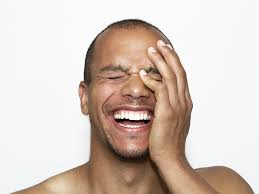 In a 2013 study Carolyn McGettigan and her colleagues scanned the brains of 21 participants while they passively listened to clips of laughter elicited by funny YouTube videos or laughter produced on command (with instructions to sound as natural as possible). Subjects whose medial prefrontal cortex “lit up” more when hearing the posed laughter were better at detecting whether laughs were genuine or not in a subsequent test. (This medial prefrontal cortex brain region is involved in understanding the viewpoint of others.) If you hear a laugh that seems ambiguous in terms of what the person means then it makes sense that you will try to work out why the person is doing this.
In a follow-up study in 2016, McGettigan and her colleagues recruited a fresh set of participants to rate the laugh tracks on various qualities, such as authenticity and positivity. They compared these findings with the original brain data and found that the activity in the medial prefrontal cortex was negatively correlated with the genuineness of the laughs: the more active the medial prefrontal cortex, the less genuine the laugh. Their analyses also revealed that both types of laughter engaged the auditory cortices, although activity in these brain regions increased as the laughs became happier, more energetic and more authentic. These results suggest that the brain is not working hard to classify laughs but that it is working hard to figure out the vocaliser’s intention. This is important in terms of evolution: it is good to be able to detect if someone is authentically experiencing an emotion versus if they’re not, so that you are not fooled.
Teaching Robots to Laugh
Did you know that expressing humour is a key part to being human?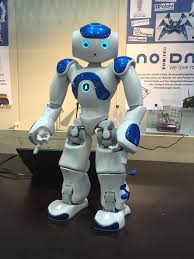
When robot Nao (see picture) laughs, he does so with his whole body: slapping his knees, shaking his head. But the adorable android, made by SoftBank Robotics, is not merely good at expressing mirth; he can correctly identify as much as 65 percent of happy laughter outbursts in humans, according to a study presented in 2015 at a nonverbal language workshop in The Netherlands. Once robots like Nao master human laughter, they will make far more likable and realistic companions.
Nao’s creators and other scientists are studying the minutiae of human laughter— acoustics, breath, body movements and vibrations—to translate them into algorithms that robots and avatars can learn. And that includes learning how to be funny. In 2016 researchers in South Korea and Singapore showed that Nao is already quite good at telling jokes. When he did a stand-up routine alongside an experienced actor, his taped performance was later consistently rated just half a point below the human on a scale of 1 to 7. Moreover, people were less disgusted by disparaging jokes if the robot told them. Taezoon Park, an industrial engineer says that in the future, scientists will optimise the robot’s tone of voice, facial expressions and subtle gestures to fine-tune his comedy.
 Robots still have a long way to go to fully understand human laughter, which can signify anything from happiness and amusement to sexual interest, embarrassment or anger. Also baffling to machines is the fact that laughter can vary: there is the classic ha-ha- ha laughter, speech laughter (when you speak while laughing) and smile speech (talking while smiling). Distinguishing among these types will be vital for better human-robot interactions. Since laughter is such a crucial part of what it means to be human, artificial intelligence will not be convincing until machines can laugh along with us…..
Further, for robots to laugh convincingly with humans, they must be able to tell when a person wants such an interaction. Apparently an ‘inviting laugh’ is longer and louder and has a higher pitch than an ‘isolated laugh’. According to computer scientist, Khiet Truong, humans respond to an inviting laugh within half a second on average. Robots will need to do the same—otherwise it is no longer natural (robots=natural??).
If these efforts succeed, we may soon have humourous robots and avatars that can assist the elderly, cheer up hospital patients, play with kids and help keep us amused. I wonder how long it will take researchers to realise that human contact and laughter is irreplacable even with a laughingly-accurate android?
No Laughing Matter
Humour has been touted as a panacea that boosts the immune system, smoothes the way to success at work and even helps us to live longer. But for some people, chuckles are no laughing matter.
Those who suffer from gelotophobia, or fear of being laughed at (but it sounds more to me like a fear of ice-cream), dread even well-intentioned jokes. They don’t trust friendly laughter—that someone is just enjoying themselves. Any laughter is bad laughter. Willibald Ruch recalls one case he observed in his laboratory: the person would always wait for the next bus if no seat in the last row was free. He could not stand the idea that someone would sit behind him and laugh.
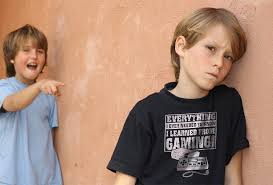 Like most phobias, this one exists on a spectrum from mild to severe. To assess the extent of the problem, scientists ask people to rate how much they identify with statements such as “It takes me very long to recover from having been laughed at” or “When others laugh in my presence, I get suspicious.” Studies across the globe suggest anywhere between 1.6 and 13 percent of people suffer from gelotophobia. The lowest numbers are seen in countries where people are more equal, such as Denmark and the Netherlands, and very high scores are seen in countries where honour is particularly important and shame is used for social control such as some Asian countries.
Researchers are just beginning to understand how gelotophobia develops. In addition to culture, parenting may play a role. In a study of 100 families, mothers and fathers who were prone to punishment and control were more likely to have kids who feared laughter. Several studies have shown that gelotophobes were often victims of bullying. Also, a 2012 study suggested a partial overlap with social anxiety, finding that 36 percent of gelotophobes meet the criteria for the disorder.
Brain-imaging studies show that gelotophobes process humour differently from other people. A 2016 electroencephalographic (EEG) study revealed that when the former listen to the sounds of laughter or angry shouting, they show more activity along pathways linking their prefrontal and posterior cortices. The study’s lead author, Ilona Papoušek, a psychologist at the University of Graz in Austria, believes this linkage shows they are more sensitive to actual or supposed malicious aspects of laughter.
Another experiment published in 2016 showed that compared with a control group, gelotophobes have lower activation in their brain’s reward circuits when listening to jokes. It remains unclear, though, what comes first: gelotophobia or atypical processing of laughter in the brain.
The good news, Ruch suspects, is that gelotophobia should respond to the same kind of therapies used for other phobias. The bad news is it might be hard to convince someone who dreads laughter to visit a therapist, who might smile at patients to put them at ease.