DOWNLOAD THE ENTIRE JANUARY 2015 NEWSLETTER including this month’s freebie.
You lie in bed in the morning, reluctant to get out from under the warm embrace of your duvet. After several bleary minutes, you finally rouse yourself, throw on some clothes and head to the office. Having arrived at your desk, you stare blankly as e-mail loads on your screen. When you first started this job, you derived deep satisfaction from addressing the day’s challenges efficiently and artfully. Yet the optimism that used to buoy you is long gone. Now your morning coffee gives you the only jolt of energy you’ll feel all day….
The details differ by profession, but this state of being is the essence of burnout. It undoes a person’s ability to pursue a happy, healthy and productive professional life. Given that many of us spend the bulk of our waking hours at work, burnout can pose a real threat to overall well-being.
 Often it begins with pure exhaustion. When you are worn out, you invest less in your job. As a result, you accomplish fewer things and feel less effective than you did before. Because work has ceased to offer the same psychological rewards, you start to feel cynical about your role. This set of emotions— exhaustion, feelings of inefficacy and cynicism—feed off one another, producing a vicious cycle of deepening burnout.
So do you just quit? Quitting is probably not the answer, although you might want to look for a different job. To recover a professional joie de vivre, it helps to understand the basics of burnout from a psychological perspective. Decades of research have revealed several core truths about the syndrome. First, banish the idea that it arises from a personal failing. People who face burnout do not lack some essential quality, such as work ethic, resilience or self-confidence. When all goes well, we naturally tend to bring dedication and pride to our work. Burnout represents the erosion of these noble qualities. Research has consistently pointed to management practices and poor job designs as the leading causes. The ways supervisors lead, and the structure of employees’ workdays, fail to bring out the best in people.
If you suffer from burnout, your relationship with your job has gone sour. Just as a fight with a partner or close friend can exhaust you and cause you to pull away from that person, so can a soured relationship with your job sap your enthusiasm and alienate you. Relationships are complicated things, however, so there is no single solution, no magic bullet, no “one size fits all” approach. Yet with patience and optimism, anyone can find a path back to engagement.
The Rise of Burnout
 The use of the term “burnout” began gaining popularity in the 1970s, especially among people working in human services. Herbert Freudenberger, a psychologist at an alternative mental health agency, and Christina Maslach, professor of psychology at the University of California, Berkeley, wrote early articles describing idealistic young professionals in health care and social work who were overextending themselves. They felt discouraged because they did not have sufficient resources to do their jobs well. Instead of building a better world, they felt they were marking time in a dysfunctional system.
Psychologists’ understanding of burnout has since broadened to include any job and a wide range of causes. The most familiar reason for burnout is exhaustion from working too hard with insufficient rest. Yet that condition alone does not cause burnout, nor is it the only route. New entrants to the workforce can find their hopes dashed on entering jobs incompatible with the values they have been taught. Midcareer employees can feel disappointed that they have not advanced as they had hoped. People in service jobs are susceptible because of the high tedium and inflexibility of their workdays. Any environment where conflict or incivility is rampant can also produce burnout.

Dozens of studies support the idea that burnout has three main components: exhaustion, cynicism and inefficacy. Experiencing one of these dimensions alone is a risk factor, but qualities of the workplace can conspire to produce the other two facets, pushing a person into true burnout. The three feelings tend to be related—for example, you would not stay in a purely cynical state over the long term. Either you would start to feel exhausted and ineffective, or something breaks the trend and you find a way to reengage with your work.
Ultimately the true culprit is a mismatch between a person and a job. You might not have the resources you need, or your bosses might expect you to complete a task in a way that clashes with your principles. For example, health care providers in surveys often cite tensions between their professional ideals—to be emotionally supportive to their patients—and the constraints that undermine that goal, namely insufficient staffing and outsized workloads. The
quantity of work is important, but the real trouble arises from an employee’s perception of his or her performance.
Another type of mismatch stems from lack of control. Letting people make decisions about how they spend their days is vital to a healthy work arrangement, but a sense of control can be easily eroded. Managers who set unrealistic expectations for an employee contribute to its loss. So do colleagues who do not communicate well. We all rely on others while doing our jobs, and poor communication can make our workdays more difficult and unpredictable than they need to be. When people feel that they lack control over their own work, they are particularly prone to feeling cynical and ineffectual.
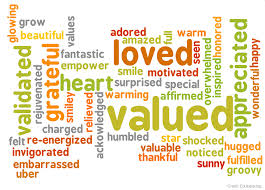 Bosses who fail to express their appreciation also contribute to workers’ feelings of inefficacy. Indeed, research has shown that negative interactions with a supervisor incline a person toward burnout. Yet not all praise is created equal. For example, in the studies reported, there was one organisation in which employees resented an employee-of-the-year award. The rank and file perceived the accolade as an indicator of who was in the good graces of company leaders and little else. Seemingly inequitable promotions can similarly harm engagement. In a 2014 survey conducted by Leiter of people’s feelings of burnout, one respondent wrote, “It is difficult to watch the randomness of why some are promoted and others are ignored. It drains the spirit from you.” That interviewee directly linked a feeling of being unappreciated with a loss of energy—a strong indication of burnout.
Early Warning Signs
 The emotional distress of this syndrome can persist for years. Because it can become chronic, researchers have investigated if it would be possible to predict—and thus potentially ward off—the emergence of burnout. In a study published in 2008, 446 employees were surveyed from an administrative department at a large university, first at the beginning of the investigation and then again a year later. Numerous areas of their work life were probed to assess burnout. The researchers were curious to see how people who scored high on only one of the three dimensions— say, only high cynicism or only high exhaustion—would rate a year later. If they became more burned out, the investigators wanted to know what tipping point might send them in that direction.
As it turned out, one such indicator was found: workplace fairness. People who perceived favouritism, cheating or other inequities were more likely to be burned out by the end of the study. Conversely, employees who viewed the workplace as a just environment tilted back toward engagement. A coincidental event during the year of the study brought the issue of fairness into stark relief. Investigators uncovered members of the department who were stealing from it. The final survey occurred soon after a few employees were apprehended and dismissed, so the researchers could assess how disruptive this event had been. The thefts undermined trust among colleagues, weakened employees’ sense of job security and, as a result, deepened burnout.
In a follow-up study of more than 4,000 forestry workers, published in 2013, Leiter and colleagues at the Finnish Institute of Occupational Health found that other factors could also be triggers for burnout. In this case, employees experiencing cynicism (but who retained high energy and efficacy) were more likely to re-engage if they felt their organisations communicated with them well, keeping them in the loop on important developments. Those without this belief slid into exhaustion and solidified their incipient burnout. For workers whose early-warning sign was feeling ineffective, the key factors were whether they could exercise diverse abilities and whether the job was predictable. What these results tell us is that there is not just one recipe for burnout. The context or culture of a workplace plays a major role.
The data further suggest that symptoms of burnout should be taken seriously. As part of the Finnish study, data was collected on participants’ purchase of psychotropic drugs, mainly antidepressants, between 2000 and 2008. The people who experienced increasing burnout were more likely than others to use these drugs in the subsequent decade. So if you notice yourself feeling chronically cynical, exhausted or ineffective at work, take a careful look at the characteristics of your job. It might be time to take some preventive action.
The Social Solution
Because burnout depends heavily on the specific relationship between a person and job, broad guidelines for recovery are hard to come by. Nevertheless, it now seems that improving the quality of workplace relationships may be one general way to intervene. Social exchanges between colleagues play a role in many facets of burnout.
 First, your co-workers have the skills, information, materials and influence needed to get things done. As you might expect, people share more readily with individuals they admire and trust. Conversely, hostile workplaces eat away at a person’s ability to focus on his or her work. Consider, for example, this anecdote, also from Leiter’s 2014 survey, in which one person articulates the energy tax of negative interactions: “I love my work. I am an avid learner and a very positive person. But I work in a toxic workplace. This is a highly political environment that encourages competition between colleagues, backstabbing, gossiping and hiding information. I find going to work very difficult and come home exhausted.” Other participants in studies have similarly cited the emotional toll of unpleasant interactions. They describe feeling upset for days following a few rude words from a colleague and losing sleep over the incident—both factors that make it difficult to engage in what otherwise might be pleasurable tasks.
An opportunity to try to alleviate burnout arose in a meeting with the leaders of a hospital in 2008. These executives had taken reasonable action to strengthen the sense of community in struggling work groups, including changing team leaders and reassigning or dismissing identified troublemakers. Managers had brought in inspirational speakers and conducted team-building exercises, with minimal success.
To tackle this problem, Leiter and his research team made use of a promising approach already in place within the Veterans Health Administration (vha). In response to similar problems throughout the vha’s hospitals, a team led by Sue Dyrenforth, then director of the agency’s National Center for Organization Development, devised an intervention called CREW, which stands for civility, respect and engagement in the work-place. Knowing that burnout has a social angle, Leiter decided to deploy a version of CREW in several units of the hospital. Some of these units had a long history of problems, others were uncommunicative, and some functioned well but aspired to collaborate more.
 Employees were divided into groups of 10 to 15 people from their same unit, and one person agreed to be the head facilitator. Because every team had its own sources of tension, a collection of activities was provided for the groups to choose from rather than instructing them to follow a single script. Before the experiment began, they researchers surveyed all the participants on their perceptions of civility in their unit as well as their own conduct, so their impressions could be compared at the beginning and the end of the program.
Over six months the teams met about once a week. The facilitator might kick off a session by asking a question such as “How do we show respect (or disrespect) for one another here?” Then attendees might do an exercise to help settle a dispute between two people. The meetings gave employees an opportunity to work through strained relationships and practice more productive ways of defusing emotions. During the rest of the week, participants were encouraged to practice specific civility behaviors and log any acts of kindness they witnessed.
In 2011 the results were published from applying CREW to a group of Canadian hospitals. These confirmed that improving workplace civility decreases burnout. Even more encouraging, the same researchers have since found that these gains remained when they were followed up one year later. The results suggest that CREW had esta lished new, self-sustaining patterns of social interaction.
Yet the reviews were not all glowing. The hospitals found the personnel cost of implementing CREW to be a burden. Participants had to go out of their way to fit the sessions into their workdays. Applying the lessons to their day-to-day work life also required sustained effort. Given the occasionally irksome nature of the program, it is actually pretty impressive that CREW can be effective at all ;=)
Finding Engagement
Given that not every company is about to start implementing CREW, what is an individual worker to do? Many corporations may see squeezing every bit out of employees to be to their advantage. Organisations by and large do not expect to retain their employees forever, so they are unlikely to serve their workers’ long-term interests. Employees thus must shoulder the responsibility of maintaining a sustainable work environment themselves.
The “company of one” perspective encourages individuals to think of themselves as independent contractors even when they are in an employment situation. Employees’ primary focus should remain on preparing themselves for the next career opportunity that may arise. Doing so will require establishing work habits that depart from an employer’s vision. In short, thriving in today’s work world—where cost cutting is a prime objective and employees are routinely stretched too thin—requires serious self-management. You will need to stick to a routine, even when pressured to behave otherwise.
Because burnout is a relationship issue, the individual has some, but not complete, control over circumstances. What follows are a few basic strategies for improving your contribution to the relationship. The good news is that many of these suggestions happen to be good for life in general, so you will benefit in many ways from developing these habits.
 First up is fitness. A healthy way of life increases your resilience. A combination of sufficient exercise, nutrition and sleep will reduce your vulnerability to exhaustion. Although the job will not change, you will increase your endurance—and maybe even learn to thrive.
Closely related to fitness is a habit of integrating recovery cycles into your life. Demanding work depletes your physical, emotional and cognitive resources. As the saying goes, there is a reason it is called work. Your personal life should afford opportunities to enjoy relationships, catch up on sleep and take time for reflection. To reverse a trend toward burnout, a key step is to establish a firm structure for recovery activities. Lacking a structure, you will not make time for recovery in the course of a busy life.
You can incorporate small amounts of exercise and recovery into the workday, too. The strategy here is simple: get off your arse! Set an alarm every 30 minutes as a signal to get up and walk around. You can devise some activities that would convince an observer that this meandering is a necessary part of your work.
 Now let us incorporate the social angle. As demonstrated with CREW, improving the quality of day-to-day exchanges among colleagues reduces burnout. You do not need your entire team to join you on this journey, but if you can recruit a friend or two to share a burnout-reduction project (a short midday walk, perhaps) the mutual support can be powerful.
Receiving good vibes from others is an uplifting experience, but so, too, is expressing them to others. Keep a tally of your own acts of kindness toward colleagues. To whom did you express appreciation today? Collaborating with a companion will, again, help you get the most out of this project.
Last, consider something the Americans call job crafting. You very likely have more latitude in your work than you think. Job crafting is an analytic approach that involves identifying the duties you find tedious and the aspects you find fulfilling. You can develop a plan to spend a bit more of your day on the good parts. Those increments can add up over time. Just ensure that the additional time you are spending on the fulfilling tasks makes a meaningful contribution, so you keep aligned with your colleagues and supervisor/boss.
These ideas may sound like a big investment, but the truth is that burnout can be hard to shake. Once the syndrome has set in, you must commit to a deliberate practice to find your way back to a healthy, fulfilling relationship with work. Yet it can be done, so let’s put that out as a New Year’s Resolution.
References:
■ Early Predictors of Job Burnout and Engagement. Christina Maslach and Michael P. Leiter in Journal of Applied Psychology, Vol. 93, No. 3, pages 498–512; May 2008.
■ The Impact of Civility Interventions on Employee Social Behavior, Distress, and Attitudes. Michael P. Leiter, Heather K. Spence Laschinger, Arla Day and Debra Gilin Oore in Journal of Applied Psychology, Vol. 96, No. 6, pages 1258–1274; November 2011.
■ Organizational Predictors and Health Consequences of Changes in Burnout: A 12-year Cohort Study. Michael P. Leiter et al. in Journal of Organizational Behavior, Vol. 34, No. 7, pages 959–973;
October 2013.
■ Conquering Burnout. Michael P. Leiter and Christina Maslach in Scientific American Mind, Vol. 26, No. 1, pages 30-35; January/February 2015.