The Best New Year’s Resolution Might Be to Just Let Go of an Unfulfilled Life Goal

Posted Posted in Jayne's blog

Since the 19th century, when motivational science had its start, scientists have focused on what makes us persist through difficulties and achieve what we want. Only recently have they zeroed in on how we can relinquish our cherished aspirations—and why we should. Leaving aside a cherished objective may benefit psychological and even physical health. They term this process “goal disengagement,” and New York University research psychologist Gabriele Oettingen says it has been treated as the “black sheep” of the field.

Why is that so? Western cultural bias celebrates persistence and achievement, so abandoning goals is seen as “failure.” These mainly focuses on long-term goals central to our lives or identity: getting a degree, finding a partner, becoming a homeowner. Some aims may be shorter-term, such as training to run a marathon, but they all require commitment, effort and sacrifice.

Endless research and everyday experience tell us that overcoming obstacles to eventually succeed is essential for our well-being. Such initiatives can be anything from a child falling on his face until he learns to walk to a law school graduate finally passing the bar exam.

But trying and trying again is not the whole story. What the latest science shows us is the importance of abandoning ambitions when they become too costly or their feasibility plunges, or both. Given the long-running emphasis on the value of persistence, an immediate question arises: Is letting go as critical as persisting? It’s hard to know. What matters most for our well-being seems to be the balance between both processes.

The ability to set goals, pursue them despite setbacks and then quit them as circumstances change is adaptive and healthy. So is finding and committing to meaningful new aspirations. Some of us are much better at doing one or both of these things, and how well we do them dramatically affects our emotional and physical health.

To measure how our natural abilities to do both these things affect people’s lives, psychology professor Carsten Wrosch of Concordia University in Quebec and Michael Scheier, a professor emeritus at Carnegie Mellon University, developed the Goal Adjustment Scale (GAS). It asks people how they react when forced to stop pursuing an important goal. One self-rating component declares, “I stay committed to the goal for a long time; I can’t let it go.” Another says, “I seek other meaningful goals.”

The GAS measures both people’s ability to disengage and their ability to find and commit to new objectives. Wrosch says these are complementary but differing capabilities. Letting go means withdrawing both commitment and effort—it prevents repeated failures and leads to less stress, depression and intrusive thoughts. Committing to and working toward new ambitions create a sense of purpose in life and reduce the sense of failure.

Certain personality traits are linked to these abilities. Optimists may feel, ‘My life will be good again,’ which makes it easier to let go and to reengage with new goals. Psychologist Lucas Keller says he and his colleagues at the University of Konstanz in Germany have found that people who are habitual planners (if-then thinkers) sometimes have more trouble letting go but, once free, are better at finding and going after new endeavours.

Armed with a scale to measure goal-adjustment capacities, scientists have studied their impact. A 2019 meta-analysis of 31 samples overwhelmingly shows that people who are better at letting go have better functioning endocrine and immune systems, better health behaviours and fewer physical problems. Those better at pursuing new goals are healthier and function better physically under emotional distress.

In this context, two studies are particularly striking. In one conducted by Wrosch and his colleagues, two groups of parents were compared: the first group’s children had cancer, and the second group’s children were healthy. The parents of healthy children had generally low depression. The parents of children with cancer, however, reported high depression if they were unable to disengage or reengage. Their counterparts who were able to disengage and reengage, by contrast, had low depressive symptoms, similar to the parents of healthy children.

Another study followed 135 adults, aged 64 to 90 years, over about six years at a time of life when physical declines often make certain desired pursuits no longer possible.  For those who scored high in disengagement abilities, depressive symptoms were generally low and did not worsen. Those who scored low became more depressed over time, and at the end of the multiyear period, they reached a level of depression that warranted clinical evaluation and possible intervention.

Across a variety of studies, Wrosch and his colleagues have found that the ability to disengage is related to both lower cortisol levels and better immune function. In the context of stress and unattainable goals, it would seem that goal disengagement and goal reengagement capacities can become paramount to protect well-being and health.

When we set career or relationship targets that are closely linked to our identity, it can be hard to give them up even in the face of insurmountable barriers. We’ve invested a lot in getting that doctorate, trying to conceive with repeated fertility treatments, selling that invention. Deciding when—or whether—to give it up is not easy. In fact, it can be a long and complicated process in which people are torn between the need to hold on and the need to let go. University of Zurich motivation psychologist Veronika Brandstätter-Morawietz and her colleagues have termed this struggle an “action crisis.” Making a decision about whether to stay or go operates on three levels: behavioural (the effort you put in), cognitive (the continued evaluation of your progress and prospects) and emotional (whether you still treasure the goal).

Such crises are hardly rare. In an unpublished study of 100 high-level executives that Brandstätter-Morawietz conducted in 2017, 60 percent said they were experiencing an action crisis at the moment, and 10 percent had experienced one previously. This data gives some idea about how common action crises are.

When you literally cannot do anything about your goal but still ruminate about it—as happened to many people through job loss during the COVID pandemic—researchers found that having a higher percentage of  these “frozen goals” and fixating more on them led to greater stress, depression and anxiety. Such people had stopped working toward their goals, but they had not disengaged cognitively or emotionally.

A feeling of having no control may play a role in such outcomes. Experiments by University of Zurich psychology researcher  Zita Mayer and her colleagues showed that when subjects shelved one of two desirable goals with the option of returning to the shelved goal later, they experienced less regret than those who permanently gave up on one of the goals.

Cognitive strategies exist to help people get unstuck from the pursuit of a fruitless objective. Some work by helping them reappraise the feasibility and desirability of their aims. Mindfulness can do this. It works by allowing people to free themselves from defenses and judgments, opening them up to information that may be unwelcome but is critical to accurately evaluating their progress and chances of success.

The most notable goal-focused strategy is called mental contrasting with implementation intentions (MCII), which can help people avoid bumping up against immovable objects in the first place. When MCII is used at the start, it might help people set goals that are attainable and mentally prepare for difficult situations.

MCII was the creation of New York University research psychologist Gabriele Oettingen. She has made it publicly available online (see the link below in the References) as WOOP (Wish, Outcome, Obstacle, Plan). Tested in study after study, MCII has shown that it can achieve behaviour change in areas as diverse as education, health and personal relationships. Mostly it’s been used to help people persist, overcome obstacles and achieve their goals—when those goals are possible. It’s also equally effective for actively disengaging from goals—when obstacles are perceived as insurmountable.

MCII works this way: People identify their wish for a desired future—let’s say becoming a medical doctor. They imagine the best possible outcome, being happy as an oncologist helping save cancer patients. Then they consider and imagine the critical obstacle—mediocre grades in science, for example. They think of ways to overcome the obstacle and make a plan. This might entail getting a science tutor and studying harder. If, despite these measures, they still do not score higher than a C in science courses, another MCII will help to possibly change their plan or course of action.

The idea is to face obstacles head-on. If you understand that they are insurmountable or that another goal is presently more urgent, then you can save a lot of resources by saying, ‘I better get out.’ Then you can adjust your wish, postpone it to another time or let it go.

The effects of MCII occur on all three levels: cognitive, emotional and behavioural. In many studies, it was shown to help people to stop planning for a likely futile goal. The strategy made them feel “cool” with the change and prevented them from investing energy and resources in that goal.

So your best New Year’s Resolution might be to just let go of that unfulfilled life goal….

REFERENCES

Wrosch, C., Scheier, M.F. Personality and quality of life: The importance of optimism and goal adjustment. Qual Life Res 12 (Suppl 1), 59–72 (2003). https://doi.org/10.1023/A:1023529606137

CARSTEN WROSCH, MICHAEL F. SCHEIER, CHARLES S. CARVER & RICHARD SCHULZ (2003) The Importance of Goal Disengagement in Adaptive Self-Regulation: When Giving Up is Beneficial, Self and Identity, 2:1, 1-20, DOI: 10.1080/15298860309021

Meaghan A. Barlow, Carsten Wrosch, Jennifer J. McGrath. Goal adjustment capacities and quality of life: A meta-analytic review. Journal of Personality. Volume88, Issue 2, April 2020, pages 307-323

Wrosch, C., Scheier, M. F., Miller, G. E., Schulz, R., & Carver, C. S. (2003). Adaptive Self-Regulation of Unattainable Goals: Goal Disengagement, Goal Reengagement, and Subjective Well-Being. Personality and Social Psychology Bulletin, 29(12), 1494–1508. https://doi.org/10.1177/0146167203256921

Dunne E, Wrosch C, Miller GE. Goal disengagement, functional disability, and depressive symptoms in old age. Health Psychol. 2011 Nov;30(6):763-70. doi: 10.1037/a0024019. Epub 2011 May 23. PMID: 21604877; PMCID: PMC3350205.

Brandstätter, V., Herrmann, M., & Schüler, J. (2013). The Struggle of Giving Up Personal Goals: Affective, Physiological, and Cognitive Consequences of an Action Crisis. Personality and Social Psychology Bulletin, 39(12), 1668–1682. https://doi.org/10.1177/0146167213500151

Hubley C, Scholer AA. Melting COVID-frozen goals: How goal disengagement supports well-being during the COVID-19 pandemic. Motiv Emot. 2022;46(6):752-768. doi: 10.1007/s11031-022-09959-w. Epub 2022 Jul 6. PMID: 35818607; PMCID: PMC9258764.

Holding, A., Moore, A., Verner-Filion, J. et al. Choosing to lose it: The role of autonomous motivation in goal disengagement. Motiv Emot 46, 769–789 (2022). https://doi.org/10.1007/s11031-022-09952-3

Whoop My Life https://woopmylife.org

Oettingen, G 2014, Rethinking positive thinking: Inside the new science of motivation. Penguin Random House, New York, NY.

Gabriele Oettingen (2012) Future thought and behaviour change, European Review of Social Psychology, 23:1, 1-63, DOI: 10.1080/10463283.2011.643698

Can Kindness Have Unexpected Positive Consequences?

Posted Posted in Jayne's blog

Scientists who study happiness know that being kind to others can improve well-being. Acts as simple as buying a cup of coffee for someone can boost a person’s mood, for example. Everyday life affords many opportunities for such actions, yet people do not always take advantage of them.

In a set of studies published online in the Journal of Experimental Psychology: General, scientists at the University of Chicago Booth School of Business examined a possible explanation. They found that people who perform random acts of kindness do not always realise how much of an impact they are having on another individual. People consistently and systematically underestimate how others value these acts.

Across multiple experiments involving approximately 1,000 participants, people performed a random act of kindness—that is, an action done with the primary intention of making someone else (who isn’t expecting the gesture) feel good. Those who perform such actions expect nothing in return.

From one procedure to the next, the specific acts of kindness varied. For instance, in one experiment, people wrote notes to friends and family “just because.” In another, they gave cupcakes away. Across these experiments, the researchers asked both the person performing a kind act and the one receiving it to fill out questionnaires. They asked the person who had acted with kindness to report their own experience and predict their recipient’s response. The idea was to understand how valuable people perceived these acts to be, so both the performer and recipient had to rate how “big” the act seemed. In some cases, the investigators also inquired about the actual or perceived cost in time, money or effort. In all cases, the performer’s expectations of the recipient’s mood were compared with the recipient’s actual experience.
Across the investigations, several robust patterns emerged. For one, both performers and recipients of the acts of kindness were in more positive moods than normal after these exchanges. For another, it was clear that performers undervalued their impact: recipients felt significantly better than the kindness givers expected. The recipients also reliably rated these acts as “bigger” than the people performing them did.

The scientists initially studied acts of kindness done for familiar people, such as friends, classmates or family. But they found that participants underestimated their positive impact on strangers as well. In one experiment, participants at an ice-skating rink in a public park gave away hot chocolate on a cold winter’s day. Again the experience was more positive than the givers anticipated for the recipients, who were people that just happened to be nearby. While the people giving the hot chocolate saw the act as relatively inconsequential, it really mattered to the recipients.

The research also revealed one reason that people may underestimate their action’s impact. When one set of participants was asked to estimate how much someone would like getting a cupcake simply for participating in a study, for example, their predictions were well-calibrated with recipient reactions. But when people received cupcakes through a random act of kindness, the cupcake givers underestimated how positive their recipients would feel. Recipients of these unexpected actions tend to focus more on warmth than performers do.

The study suggests that simply being part of a positive, prosocial interaction is meaningful beyond whatever it is a person receives. People understand that cupcakes can make people feel good, to be sure, but it turns out that cupcakes given in kindness can make them feel surprisingly good. When someone is thinking primarily about the tasty treat they are giving away, they may not realise that the warmth of that gesture is an extra ingredient that can make the cupcake even sweeter.

Missing the importance of warmth may stand in the way of being kinder in daily life. People generally want to perform kind actions—in fact, many of our participants noted that they’d like to do so more often. But the data suggest that underestimating the impact of one’s actions may reduce the likelihood of kindness. If people undervalue this impact, they might not bother to carry out these warm, prosocial behaviors.

Furthermore, the consequences of these acts may go beyond a single recipient: kindness can be contagious. In another experiment, researchers had people play an economic game that allowed us to examine what are sometimes called “pay it forward” effects. In this game, participants allocated money between themselves and a person whom they would never meet. People who had just been on the receiving end of a kind act gave substantially more to an anonymous person than those who had not. Meanwhile the person who performed the initial act did not recognise that their generosity would spill over in these downstream interactions.
These findings suggest that what might seem small when we are deciding whether or not to do something nice for someone else could matter a great deal to the person we do it for. Given that these warm gestures can enhance our own mood and brighten the day of another person, why not choose kindness when we can?

Do You Pick Friends Who Smell Like You?

Posted Posted in Jayne's blog

Have you ever met someone and known right away you’d found a new friend? Was it their smile, their laugh, a twinkle in their eye or maybe a clever joke they told?

In truth, the deciding factor might have been an underappreciated item on your subconscious checklist. As is the case for many mammals, your instant bond may have developed right after the first sniff.

Whether we notice it or not, we are constantly probing our surroundings with our smell radar just like rodents and nonhuman primates. Mice and chimps seem to have the scent awareness to know immediately who to befriend and who to rebuff. And though we might think of ourselves as apart from our warm-blooded relatives, new research shows that us hairless humans may not be so different after all.

Yes, we gravitate toward a smile or people we have something in common with, such as age, personality, and even physical appearance, but it seems we might also secretly seek out those who smell like us. Inbal Ravreby, a neuroscientist at the Weizmann Institute of Science in Rehovot, Israel, got her inspiration for an experiment to test out this idea after she started to contemplate the phrase “There is chemistry between us.” Sure, Ravreby reasoned, it could just be another figure of speech. Some phrases are just phrases, after all, but sometimes we have phrases because people notice a phenomenon. It felt to her like something worth checking out….

Ravreby and her research team did just that by employing a chemical sensing device called an electronic nose, along with a collection of human “smellers” to back up its measurements. Their work — published in Science Advances — found that friends who “clicked” when they first met smelled more alike than random pairs of people, suggesting our nose might play a part in how we know who we’ll get along with best.

For the experiment, the researchers gathered 20 pairs of same-sex friends who reported clicking during their first encounter with each other. For three days, participants gave up scented soaps, garlic and anything else that might alter their body odour, and each wore a cotton T-shirt to bed to capture their scent.

The stinky shirts were handed over to the electronic nose, which used an array of sensors to measure the chemical difference in the body odours of the members of each pair. The researchers found that twosomes who clicked with each other when they met had more similar scents, compared with randomly selected pairs of other people in the study.
To compare the electronic nose to what humans actually detect, a team of designated smellers also tested scent similarity. When sniffing body odour samples, the human smellers ranked each scent in “intensity,” “pleasantness” and another three categories. Overall, the pairs of fast friends had more similar smell rankings than the coupled strangers. The human smell squad also reported that “click friends”—when sniffed side by side—had more similar body odours than strangers, showing that the closeness in these smells was present in how people perceived them, not just the chemistry detected by the electronic nose.

Scent similarity was even able to successfully predict which pairs of complete strangers would get along 71 percent of the time. After also embedding their odour into T-shirts for aroma analysis, the pairs of strangers were placed half a metre apart to play a game where they tried to mimic each other’s movements and then asked how they felt about their partner. Players who reported clicking with their game partners had more similar body odour chemistry, additional evidence that such odour plays a role in how humans identify prospective pals.

Moving forward, Ravreby wants to delve deeper into the mechanisms behind our subconscious social sniffing. She plans to measure how brain activity responds when a person smells a body odour that reminds them of themselves versus an aroma that’s very different. Her theory is that humans constantly sniff themselves to establish a baseline scent to compare with the odours of everyone around them and that this might play a role in how we subconsciously tell friend from foe.

REFERENCES:

Inbal Ravreby,  Kobi Snitz  and  Noam Sobel. There is chemistry in social chemistry. SCIENCE ADVANCES, 24 Jun 2022, Vol 8, Issue 25.

https://www.science.org/doi/10.1126/sciadv.abn0154

Can Parkinsons Be Detected By Smell?

Posted Posted in Jayne's blog

A Scottish woman named Joy Milne made headlines in 2015 for an unusual talent: her ability to sniff out people afflicted with Parkinson’s disease, a progressive neurodegenerative illness affects millions of people worldwide. Since then a group of scientists in the U.K. has been working with Milne to pinpoint the molecules that give Parkinson’s its distinct olfactory signature. The team has now zeroed in on a set of molecules specific to the disease—and has created a simple skin-swab-based test to detect them.

Milne, a 72-year-old retired nurse from Perth, Scotland, has hereditary hyperosmia, a condition that endows people with a hypersensitivity to smell. She discovered that she could sense Parkinson’s with her nose after noticing her late husband, Les, was emitting a musky odor that she had not detected before. Eventually, she linked this change in scent to Parkinson’s when he was diagnosed with the disease many years later. Les passed away in 2015.

In 2012 Milne met Tilo Kunath, a neuroscientist at the University of Edinburgh in Scotland, at an event organised by the research and support charity Parkinson’s UK. Although skeptical at first, Kunath and his colleagues decided to put Milne’s claims to the test. They gave her 12 T-shirts, six from people with Parkinson’s and six from healthy individuals. She correctly identified the disease in all six cases—and the one T-shirt from a healthy person she categorised as having Parkinson’s belonged to someone who went on to be diagnosed with the disease less than a year later.

Subsequently, Kunath, along with chemist Perdita Barran of the University of Manchester in England and her colleagues, has been searching for the molecules responsible for the change in smell that Milne can detect. The researchers used mass spectrometry to identify types and quantities of molecules in a sample of sebum, an oily substance found on the skin’s surface. They discovered changes to fatty molecules known as lipids in people with Parkinson’s.

In their latest study, published on in the American Chemical Society journal JACS Au, the researchers revealed the results of using a simple skin-swab-based test to detect the lipid signature that is indicative of Parkinson’s. By comparing sebum samples from 79 people with Parkinson’s and 71 people without the illness, the team zeroed in on a set of large lipids that could be detected in a matter of minutes using a special type of mass spectrometry in which substances are rapidly transferred from a swab to an analyzer using just a piece of paper.

These seem to be a very promising set of biomarkers, although how accurate they are is still being investigated.  The authors of the study reported the detailed chemical profile of the unique Parkinson’s signature, they did not include an assessment of its accuracy. According to Barran, based on not-yet-published data, their test appears to be able to determine whether an individual has Parkinson’s with more than 90 percent accuracy.

The team is now working with local hospitals to determine whether this sebum-based test can also be conducted in clinical labs—a key step toward determining whether it can be used as a diagnostic tool. Ultimately, the hope is to use the test to help identify individuals who have been referred to their neurologists by their general practitioner for suspected Parkinson’s so they can receive a faster diagnosis. A skin-swab test could enable those patients to mail in skin swabs to be analysed in the hospital laboratory and pinpoint those who need help most urgently.

Barran and her colleagues are also collaborating with a group at Harvard University to determine whether sebum-based biomarkers are detectable in people who have constipation, a reduced sense of smell or other early signs of Parkinson’s but have not yet received a diagnosis.

Milne has inspired groups elsewhere to search for biomarkers based on the disease’s olfactory signature. This year researchers in China published a paper describing an electronic nose—an artificial-intelligence-based sensor modeled after the olfactory system—that sniffs out molecules present in the sebum of patients with Parkinson’s disease. Other groups in China, the U.K. and elsewhere have also been training dogs to sniff out the disease.

Parkinson’s may not be the only disease Milne has a nose for. She’s also reported noticing a unique smell in people with Alzheimer’s, cancer, and tuberculosis and is working with scientists to see whether a specific olfactory signature of those diseases can be deduced.

For Milne, the hope is that this work will ultimately benefit patients with these conditions and to speed up diagnosis and treatment, not only for the patient’s sake but for their families too.

REFERENCES:

Sinclair, E., Trivedi, D.K., Sarkar, D. et al. Metabolomics of sebum reveals lipid dysregulation in Parkinson’s disease. Nat Commun 12, 1592 (2021).

https://doi.org/10.1038/s41467-021-21669-4

Depanjan Sarkar et al. Paper Spray Ionization Ion Mobility Mass Spectrometry of Sebum Classifies Biomarker Classes for the Diagnosis of Parkinson’s Disease. JACS Au 2022, 2, 9, 2013–2022; September 7, 2022

https://doi.org/10.1021/jacsau.2c00300

Wei Fu et al. Artificial Intelligent Olfactory System for the Diagnosis of Parkinson’s Disease. ACS Omega 2022, 7, 5, 4001–4010; January 25, 2022

https://doi.org/10.1021/acsomega.1c05060

https://www.padsforparkinsons.org/news

Out of Synch: How Our Digital Lifestyles Are Scrambling Our Body’s Natural Rhythms

Posted Posted in Jayne's blog

Are you one of those people who falls asleep minutes after their head hits the pillow and awakens cheery and refreshed when the sunlight filters through the window?

If you are, then count your blessings! Your reliable inner clock may also deserve some credit for other aspects your health: good blood pressure, metabolism, digestion, and more.

Millions of people across the world — including nurses, firemen, airline crews, lorry drivers and factory workers — have irregular work schedules that may cause a disconnect from the basic time-based patterns of daily life. Our internal organs operate in patterns called circadian rhythms that repeat over the course of each 24-hour day. And research is revealing that when these physiological rhythms are out of sync— a state known as circadian misalignment—the health impacts can be vast, from diabetes and obesity to cancer, heart problems, infertility, mood disorders and mental decline. Our bodies are optimised to work with a certain relationship to the natural world and good health follows from that. However, it often seems that in modern life we’ve taken the world and done with it what we wish….

Because modern routines clash with natural rhythms, scientists are beginning to suspect that virtually everyone is affected to some degree. Staying up late to work or have fun, using laptops, mobiles and other screens before bed or to quell insomnia in the middle of the night, indulging in midnight snacks—all these apparently innocuous activities can subtly throw the body off-kilter. The body clock is an ancient system, common to all life on earth, that relies on sunlight and darkness, periods of activity and periods of rest to calibrate itself. Today’s society, with its electric lights, 24-hour convenience stores, proliferating digital devices, global economy and “always on” mentality, has scrambled our inner timing systems.

In short, we are living in an age of circadian dysfunction.

Anyone who has flown across time zones knows what it feels like to have a body clock that is out of whack—fatigue, insomnia, digestive problems, headache, dizziness, nausea, among other symptoms. Jet lag is a classic example of circadian misalignment. The body typically adjusts within a week or so. But we are increasingly subjecting ourselves to the equivalent of permanent jet lag.

The science is so new that no one knows how many of us are affected, but people may experience mild circadian misalignment in a variety of ways without realising the root cause. It could present as stomach upset, unexplained insomnia or, more ominously, the shifts in blood pressure, inflammatory markers, insulin resistance and other metrics that signal the implacable onset of heart disease, diabetes or cancer. Happily, research reveals inexpensive and straightforward solutions that will allow most people to reset their inner clock.

Timing Is Everything

Almost every living thing, from bacteria to tigers, is attuned to the earth’s daily rotation. Evolution has smiled on creatures that capitalise on the planet’s day-night schedule, matching their internal workings to the shifting conditions of the outside world.

These are the fluctuations known as circadian rhythms (the word “circadian” comes from the Latin for “about a day”). In many animals they dictate the timing of hibernation, courtship and reproduction. Even in plants, circadian rhythms are crucial to survival. In 2015 scientists at the University of Washington found that it is thanks to a circadian gene that the common garden petunia waits until night to release its fragrance, which attracts nocturnal pollinators.

Circadian rhythms also create the ebb and flow of human physiology. They explain why fevers run highest at night, why a late meal can make it hard to sleep, why teenagers are late risers and many other familiar aspects of daily life. And they are grounded in the daily planetary shift between light and darkness.

To align the body with what’s going on in the outside world, the suprachiasmatic nucleus, which serves as the brain’s master clock and is located deep within the hypothalamus, constantly monitors the intensity of ambient light. Bright light in the morning sets the body clock for the day, and evening darkness nudges organs into their night-time mode. For example, the drowsiness-inducing hormone melatonin flows, preparing the body for rest. The bladder expands to hold more urine, making it possible to sleep through the night. And the liver makes extra glucose to keep the brain nourished throughout the overnight fast-from-food.

But if the master clock encounters bright light at night, it sends “start the day” messages at the time when organs are settling down for the evening. Circadian rhythms get scrambled. This can happen when flying across time zones (and explains why jet lag is worse when traveling east); when people use mobile phone or laptop at night (because digital screens emit the same blue wavelengths found in morning sunlight); and when people work the wee hours in a brightly lit space or fall asleep with the television (or laptop) on.

Scientists have been investigating circadian rhythms for decades, but until recently they did not appreciate how critically important these rhythms are to the regulation of nearly every bodily system. In the last 15 years or so, work on circadian rhythms and human health has really just exploded.

One of the discoveries: by banishing darkness, modern society has ushered in a host of potential health problems. We are all so used to nighttime light exposure that when you tell people it’s unnatural, they often reply, ‘What? Light?’ People don’t think of light exposure the same way they think of something like a drug or a dietary intervention, but really it does have these very profound effects on our physiology.

An even newer revelation: mealtimes may also be critically important to keeping circadian rhythms in balance. Mounting evidence suggests that the body relies not only on light exposure but also on behavioural cues to orient itself in time—sleep, exercise, social interactions and, perhaps most significant, eating.

The latest research suggests that the body is designed to take in food during the day and fast at night. Breakfast, like sunlight, seems to serve as a timing cue, alerting the body clock that it is morning. So snacking long after dark may be as disruptive to natural rhythms as staying up late bathed in the illumination of a digital screen.

Off the Clock

Scientists are learning that there is a genetic basis to people’s natural sleep inclinations. About half the population is predisposed to be either early birds or night owls, and the other half fall somewhere in between. These inherited patterns are known as chrono-types. Extreme chronotypes are rare: delayed sleep phase syndrome, for example, affects three in 2,000 people.

Misalignment Made Flesh

Disconnecting from daily rhythms strikes the body at the most basic level: the cell. In 2014 a team led by geneticist John Hogenesch of the University of Pennsylvania made an astounding discovery: Nearly half of all gene activity in mammals is timing-related. Previous estimates had been closer to 15 percent. This means the circadian clock could be influencing most, if not all, of our physiology and many of our behaviours.

Over the course of two days Hogenesch’s team removed 12 organs, including the heart, lungs and liver, from a different group of mice every two hours, then analysed the RNA from those tissue samples to figure out which genes were active in which organs at every hour of day and night. The team learned that organs do not chug along at a steady pace. Instead they are alternately active and quiescent, attending to certain tasks during the day and others at night, with “rush hours” of activity at dawn and dusk.

Another groundbreaking study, published a year earlier, detected the same telltale signs of rhythmic gene activity—in the brain. The work, conducted by the Pritzker Neuropsychiatric Disorders Research Consortium, involved 89 brains taken from people who had donated their bodies to science. Some of the donors had suffered from major depression, others had not. In the healthy brains, as in Hogenesch’s mice, hundreds of genes ramped up and slowed down at specific times of day, forming daily patterns so clear and predictable that they could be used to pinpoint time of death for an unmarked sample of brain tissue.

But the brains of depressed people were different. Their gene activity was haphazard and disorganised, lacking these daily patterns. Psychiatrists have long noticed that people with mood disorders tend to have sleep problems and other signs of circadian misalignment. Now here was physical proof that the circadian rhythms of depressed people are weak or nonexistent—circadian misalignment made flesh.

Flipping a Biological Switch

In some people the master clock gets broken. Their bodies adopt a ‘non-24’ sleep pattern with, for example, bedtime shifting an hour later each day.

Non-24 is a common side effect of blindness because damaged eyes do not transmit the necessary light signals to the master clock. But in the rare instances when non-24 affects sighted people, no one knows the cause.

The suprachiasmatic nucleus (the master clock) functions like an orchestra conductor, keeping time so that the individual rhythms of the heart, liver and other organs can coordinate—a bodily state known as entrainment. When the master clock stops working properly— whether because of a biological defect or because of frequent eating, working or socializing late into the night or at odd hours—internal organs begin operating at different tempos, like instrumentalists in a cacophonous orchestra with no maestro. Illness follows.

Organs That Cannot Keep Time

Diabetes affects more than 422 million people worldwide, four times as many as a 40-years ago. Experts cite factors ranging from the ubiquity of cheap sugary drinks and snack foods to sedentary habits. But some scientists are starting to suspect that disrupted circadian rhythms may also underlie the worldwide mass metabolic dysfunction.

For years, observational studies have shown that people who work nighttime or rotating shifts are susceptible to much higher rates of obesity and diabetes. More recently, scientists have begun to artificially induce circadian misalignment, and here, too, one of the most dramatic changes they see is an increased disposition to weight gain and metabolic problems. In 2009 Harvard scientists kept 10 healthy people in a lab, scrambling their mealtimes and sleep schedules while subjecting them to constant low light. As the participants’ inner timekeepers lost track of day and night, their blood pressure, body temperature and hormone production stopped following regular patterns. Most strikingly, levels of leptin, the hormone that alerts people that they have eaten their fill, decreased. People with low leptin levels tend to over-eat. In addition, three participants became prediabetic, all in just 10 days’ time.

Experiments in animals are yielding equally dramatic results. Multiple labs are finding that when mice are kept in constant light or are forced to eat during their normal resting time, they gain weight—even when they consume the same number of calories. We are apparently not as good at metabolising our food when it’s not eaten at appropriate times of day.

Circadian disruption leads to cognitive as well as metabolic problems. Alertness and motor coordination decline markedly. If you look at the frequency of industrial accidents, they peak between two and four in the morning. That is the time when people should not be doing anything that requires vigilance.

People whose jobs require them to work odd hours also have trouble making agile mental calculations. Emergency room doctors working the night shift showed short-term memory impairments in a 2012 study.

Animal experiments are confirming that the hippocampus, the part of the brain central to learning and memory, is highly sensitive to circadian disruption. For example, in studies published in 2013 found that rats with the equivalent of jet lag have trouble remembering what they have learned. Rats with longer-term circadian disruption, the kind that afflicts shift workers, have difficulty learning new tasks as well as recalling them.

Practically every month a new study spotlights circadian misalignment in some other ill. In a study published in 2015 scientists at the University of Warwick examined uterine lining cells from 70 women and found a higher frequency of circadian disruption in women who suffer multiple miscarriages—suggesting that misalignment of daily rhythms in the womb hampers the ability of the fertilised egg to implant. Pregnancy is all about timing—an able sperm meets a fertile egg just as it is making its way through the fallopian tube—but it turns out that timing also matters at the cellular level.

For unknown reasons, rhythms shift later during adolescence, then return to normal in young adulthood. Several recent studies suggest that the disconnect between high school start times and teens’ natural sleep needs compromises brain areas related to reward and self-control, making them more susceptible to getting hooked on drugs and alcohol. New studies also link circadian misalignment to greater risk of post-traumatic stress disorder, breast cancer and inflammatory bowel disease.

The Value of Repetition

Circadian rhythms are old-fashioned. They are conservative. They are your grandmother’s medicine. Go to bed at a reasonable hour. Eat a good breakfast. Do not push yourself too hard. Something in our modern spirit rebels against these strictures. We will stay up until 3 a.m. binge-watching films or a favourite series if we feel like it. We will fall in love with people in faraway places and use Zoom and WhatsApp to erase the time differences.

But the need for structure and daily repetition is woven into our DNA. Sunrise and sunset bookended our ancestors’ days. We evolved on a planet that has a roughly 24-hour day, and we are biologically prepared to function better if we are in a regular rhythm.

Circadian “Hygiene”

Melatonin supplements improve mood and memory in people with dementia, who suffer from disturbed sleep and other hallmarks of circadian dysfunction. Sitting near a device called a light box to get bright light in the morning is a boon for people with seasonal depression. And forward-thinking nursing home administrators are finding that when they provide varied illumination instead of keeping the lights on 24/7, elderly residents are less disoriented.

People with bipolar disorder are especially vulnerable to circadian disruption: pulling an all-nighter or traveling overseas can trigger an episode of mania or depression. Conversely, regularising routines can stabilise their moods. A therapy recently developed – interpersonal and social rhythm therapy – asks patients to record daily when they get out of bed, when they first interact with other people, when they begin their daily routine, when they have dinner and go to bed—and then to tweak those times over a period of weeks to establish a schedule they can stick to.  Keeping routines very regular, seven days a week, no shifts on weekends has proved effective in two large trials.

Circadian rhythms naturally deteriorate with age—which may account for some of the sleep and memory problems of the elderly. But strengthening circadian rhythms may be a hedge against cognitive decline. In research, old hamsters with strong circadian systems outperformed misaligned younger animals on memory tasks.

Changing habits is not easy. But if more people understood the potential long-term benefits to their mood, sleep quality, cardiovascular health, weight-loss goals and mental sharpness, they might make the effort. Maybe we should consider sleep and circadian hygiene just as important as washing our hands? It seems to be critical for good health and well-being.

There is a lesson here for us, with our overextended, brightly lit, Starbucks-fuelled lives. Modernity has made it possible to stretch beyond the confines of the 24-hour day, but in the process we have become untethered from the fundamental pulse of our planet. Science is revealing that we do so at our own risk.

REFERENCES:

Internal Time: Chronotypes, Social Jet Lag, and Why You’re So Tired. Till Roenneberg. Harvard University Press, 2012.

The Rhythms of Life: What Your Body Clock Means to You from
Eye Disease to Jet Lag.
Talk by Russell Foster. Physiological Society’s Annual Public Lecture, Birmingham, England, July 22, 2013. www.physoc.org/russell-foster-public-lecture

How to Fix a Broken Clock. Analyne M. Schroeder and Christopher S. Colwell in Trends in Pharmacological Sciences, Vol. 34, No. 11, pages 605–619; November 2013.

No, You Don’t: Essays from an Unstrange Mind. Sparrow Rose Jones. CreateSpace Independent Publishing Platform, 2013.

Does Psychosomatic Mean Imaginary?

Posted Posted in Jayne's blog

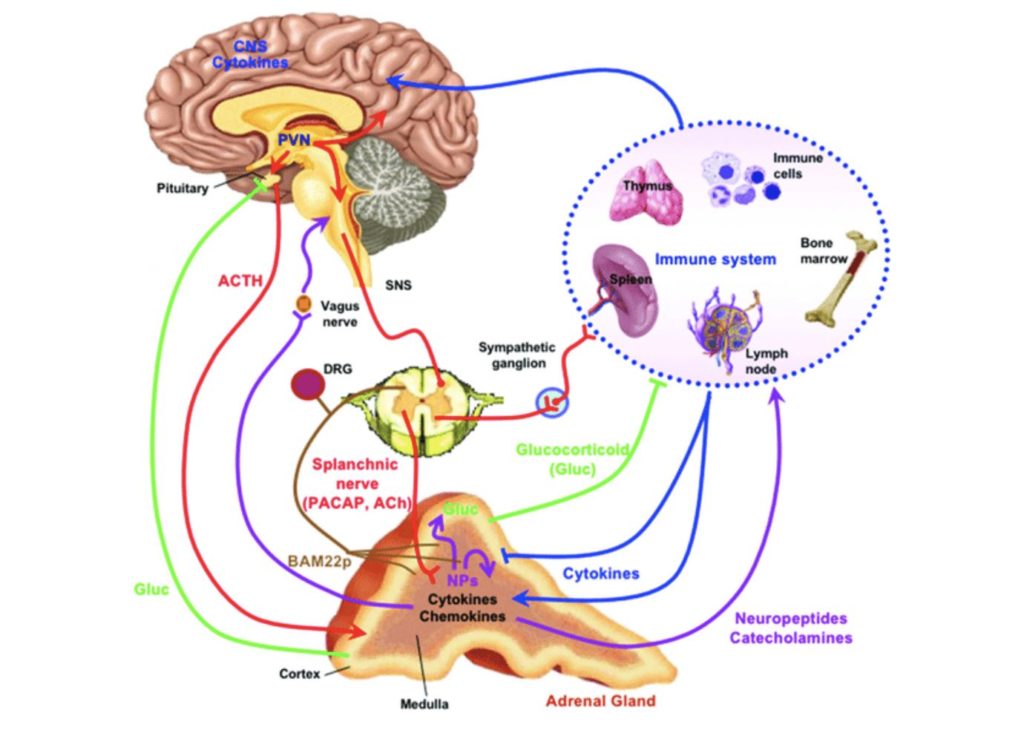
Placebo effects, exercise highs, getting sick when you’re stressed out—the popular press and the scientific literature alike are full if examples of how the mind or mental processes influence our health and well-being. This “mind-body connection” is essential for normal organ function and also is viewed as the basis for psychosomatic disorders. Yet the concept that our thoughts can influence the function of a variety of organ systems is often viewed with some (scientific)skepticism, in part because it has lacked a firm biological basis.

That’s changing. Scientists are now starting to provide the scientific evidence to reveal the important dynamic between our brains and our bodies. And in the process, we are learning how the brains of primates are different from those of other animals—a reality that has important implications for research into the causes and treatment of neurologic disorders.

The connection between the central nervous system and internal organs is mediated by sympathetic (fight or flight) and parasympathetic (rest and digest) subdivisions of the autonomic nervous system. We know a great deal about the neural connections that link autonomic output from centers in the brainstem and spinal cord to specific organs.

However, the neural circuits that link higher brain function and central sites, such as the cerebral cortex, to autonomic output and organ function have not been clearly defined. That’s because most conventional tracers are capable of defining only the direct inputs to and outputs from an organ and not the background web of connections that provide indirect, but meaningful, neural signals.

One research team at the University of Pittsburgh has overcome this challenge by using ‘neurotropic viruses’, which specifically target neurons, as transneuronal tracers. In the Proceedings of the National Academy of Sciences they fairly recently described using a rabies virus tracer to reveal the areas of the cerebral cortex that influence the adrenal medulla (a gland at the top of the kidney) of the monkey and rat, as well as rabies transport from the kidney in the rat.

In their nonhuman primate studies, they injected the rabies tracer into the adrenal medulla, and tracked its path back to brain regions involved in movement, cognition and mood. These cortical areas represent key nodes in a “stress and depression connectome.” In the rat, descending influences over the adrenal medulla, as well as the kidney, originate largely from cortical motor areas. In fact, the cortical areas that are the major source of cognitive control in the monkey appear to be absent in the rat. Thus, the mind-body connection in primates is more widespread and complex than in rats.

These observations provide a new perspective on the neuroanatomical organisation of the cortical influences over the sympathetic nervous system. The power of transneuronal tracing with rabies virus is that it reveals the entire extent of the cortical influence over this system. In this way, it identifies the potential origins of the elusive “central commands” from the cerebral cortex.

This general experimental paradigm is one that can be applied to reveal multisynaptic circuits in a wide variety of networks. For example, rabies tracer injections into limb muscles can reveal the networks involved in the voluntary control of movement; tracer injections into laryngeal muscles can reveal the central circuits responsible for vocalisation; tracer injections into the heart and stomach can reveal circuits responsible for the central control over the cardiovascular and gastrointestinal systems; and tracer injections into the spleen can reveal the central neural circuits that influence immune function.

The adrenal medulla can be considered as the “emergency helper” in situations requiring fight or flight. Thus, one might expect the input to it to be highly conserved across species. Indeed, the cortical motor areas are a major source of input to the adrenal medulla in both the rat and the monkey. But here the similarities end. The primary motor cortex, primary somatosensory cortex and a single secondary motor area account for about 93 percent of the cortical input to the adrenal medulla in the rat. In contrast, the monkey adrenal medulla receives input not only from cortical motor areas (about 53 percent) but also from cortical areas involved in cognition and affect (about 35 percent).

Furthermore, the monkey adrenal medulla receives substantial input from motor areas on the medial wall of the hemisphere that don’t exist in the rat. Thus, the monkey adrenal medulla is the target of output from a broader set of cortical areas and is influenced by a more diverse set of behaviours. Each network found in the monkey has a human equivalent. Taken together, these observations suggest that nonhuman primate models are essential for examining the influences of higher-order aspects of movement, cognition and mood on sympathetic function.

Modern medicine has generally viewed the concept of psychosomatic disease with suspicion. This is partly because of a lack of information about the neural networks that connect the “mind,” conceptually associated with the cerebral cortex, with autonomic and endocrine systems that regulate internal organs. As a consequence, some definitions of psychosomatic disorders include dismissive descriptions such as, “all in the mind,” “irrational” or “subconscious.”

These findings should correct this perspective because they provide a concrete neural substrate for cortical areas involved in movement, cognition and affect to influence a major sympathetic effector, the adrenal medulla. The researchers suggest the adoption of the view reflected in the dialogue at the end of Harry Potter and the Deathly Hallows where Harry says, “Tell me one last thing, is this real? Or has this been happening inside my head?” Professor Dumbledore replies, “Of course it is happening inside your head, Harry, but why on earth should that mean that it is not real?”
REFERENCES:

Richard P. Dum, David J. Levinthal, and Peter L. Strick. The mind–body problem: Circuits that link the cerebral cortex to the adrenal medulla. Proceedings of the National Academy of Sciences, volume 116 (52), pages 26321-26328. https://doi.org/10.1073/pnas.1902297116

Where Do ‘Aha! Moments’ Come From?

Posted Posted in Jayne's blog

Most of us have had the experience of struggling mightily to solve a problem only to find, while taking a walk, doing the washing up or (my personal favourite) having a shower, that the answer comes to us seemingly from nowhere. Psychologists call these sudden aha! moments “insight.” They occur not only when we are faced with a problem but also when we suddenly “get” a joke or crossword puzzle clue or are jolted by a personal realisation. Scientists have identified distinctive brain activity patterns that signal moments of insight, but there is still some debate about whether insight is simply the final, most satisfying step in a deliberative thought process or a wholly separate form of thinking.

An ingenious new study by a team of Belgian psychologists provides additional evidence that insight engages unconscious mechanisms that differ from analytic, step-by-step reasoning. Even when people are managing multiple demands on their brainpower, the research suggests their intuitive thought processes may still be readily accessible.You can be overloaded by cell phones and noise around you and your insights remain shielded in some way.

For that investigation, which was first published online in December 2021 in the journal Cognition, the psychologists created 70 word puzzles that undergraduate students could solve using either insight or analytic reasoning. Each puzzle consisted of three Dutch words displayed on a computer screen. The task was to find a fourth word that pairs with each. (For example, if the test were conducted in English, people might be given the words “artist,” “hatch” and “route,” with the answer being “escape” because “escape artist,” “escape hatch” and “escape route” are all recognisable phrases.)

The 105 undergraduates, most of whom were women, had up to 25 seconds to solve each problem. After typing an answer, they indicated whether they had reached it “with Aha!”—which they were told meant becoming “aware of the solution suddenly and clearly,” like a lightbulb illuminating a dark room—or calculated it step-by-step “without Aha!”—as if their brain was a room slowly being lit with a dimmer switch.

Participants were divided into three groups. The first received only the puzzles. In the second group, two random digits flashed sequentially on the screen before the words appeared, and people had to try to recall those numbers after finishing the puzzle. The third group was identical to the second except that people had to try to remember four digits instead of two.

The purpose of making people remember random numbers was to burden their mind with an unrelated task, which was expected to interfere with conscious problem-solving. The question was whether insightful thinking would be similarly affected.

Indeed, when participants used analytical thinking—by, for example, generating a phrase such as “con artist,” checking whether “con” was a match with “hatch” or “route” and then moving on—they experienced diminishing returns, solving, on average, 16 puzzles when they had no numbers to remember but only 12 puzzles when they had to remember two digits and eight puzzles when they had to remember four.

Yet when people relied on insight, not only was their success rate higher, it was unaffected by the number-recall task. These participants accurately completed between 17 and 19 puzzles, on average, in all three groups. Whether they don’t have the memory task or they have a low-demand memory task or a high-demand memory task, the number of puzzles they solved with insight remained constant. That’s a really interesting result.
A significant amount of brain activity is unconscious—that is why we can seemingly drive to work automatically and why we are not always aware of the biases that affect our decisions. But cognitive psychologists disagree about whether actual reasoning can occur below the level of awareness. There’s much debate about it within the scientific literature.

Lead researcher Stuyck believes that during moments of insight, there is a give-and-take between conscious and unconscious processes. For example, when people attempt the puzzle “pine/crab/sauce,” multiple word associations get activated but only the strongest are accessible to the conscious mind. If the correct answer happens to be a weaker association, people may feel stuck, he says, yet beneath the surface, unbeknownst to them, their mind may be ushering it into awareness. (The answer, by the way, is “apple.”) Trying to find a creative solution to a problem is like trying to see a dim star at night. You have to look at it out of the corner of your mind, as it were.

Insights typically occur after someone ponders a problem for a while and then puts it aside. Once the foundation has been laid through conscious mental effort, a stroll, nap or distracting task seems to enable a creative breakthrough, one that is typically accompanied by feelings of satisfaction and certainty.

The reason that holding two or four numbers in one’s head slows reasoning but does not affect insight-based problem-solving is because turning the spotlight on a faint idea does not seem to require mental exertion.

However, the researchers ‘caution’ against directly extrapolating from the new study to the real world. The number-recall task may have been simple enough to serve as a useful diversion, helping puzzlers reach their eureka moment. But they doubt the results would hold if people’s brainpower was more severely taxed, for example, they don’t want to recommend that people who want to be more creative at work get saddled with more work!

Stuyck’s team is about to embark on another puzzle-based insight experiment. This time the researchers will create “virtual lesions” by temporarily deactivating part of the prefrontal cortex, the brain area that we engage to consciously manipulate information. (They will use a harmless, noninvasive method called transcranial magnetic stimulation, which stimulates brain cells using magnetic fields.) This transient impairment is expected to diminish people’s success when they use an analytic approach to puzzling, but the question is whether it will affect their ability to solve problems through insight.
Fascinating, right? I love it when science starts to be to explain what we intuitively do.

To be continued!

REFERENCES:

Hans Stuyck, Axel Cleeremans and Eva Van den Bussche.

Aha! under pressure: The Aha! experience is not constrained by cognitive load.

Cognition, Volume 219, 2022, 104946.

https://doi.org/10.1016/j.cognition.2021.104946.

(https://www.sciencedirect.com/science/article/pii/S0010027721003693)

Why Your Bones Aren’t Lazy Bones

Posted Posted in Jayne's blog

Bones. They hold us upright, protect our innards, allow us to move our limbs and generally keep us from collapsing into a fleshy puddle on the floor. When we’re young, they grow with us and easily heal from playground fractures. When we’re old, they tend to weaken, and may break after a fall or even require mechanical replacement.

If that structural role was all that bones did for us, it would be plenty.

But it’s not. Our bones also provide a handy storage site for calcium and phosphorus, minerals essential for nerves and cells to work properly. And each day their spongy interior, the marrow, churns out hundreds of billions of blood cells — which carry oxygen, fight infections and clot the blood in wounds — as well as other cells that make up cartilage and fat.

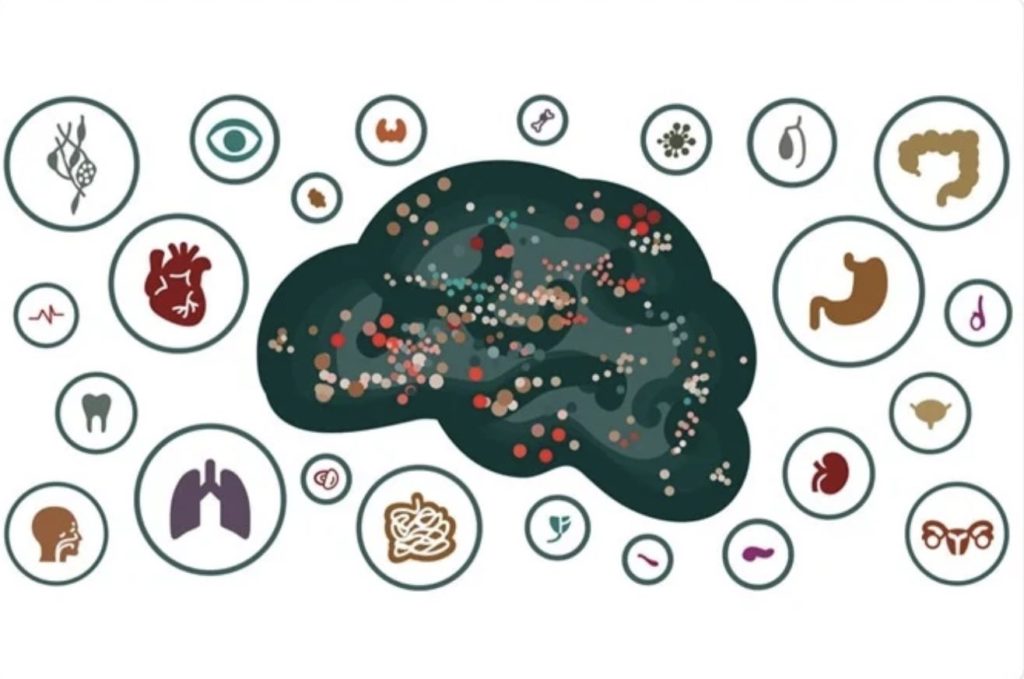
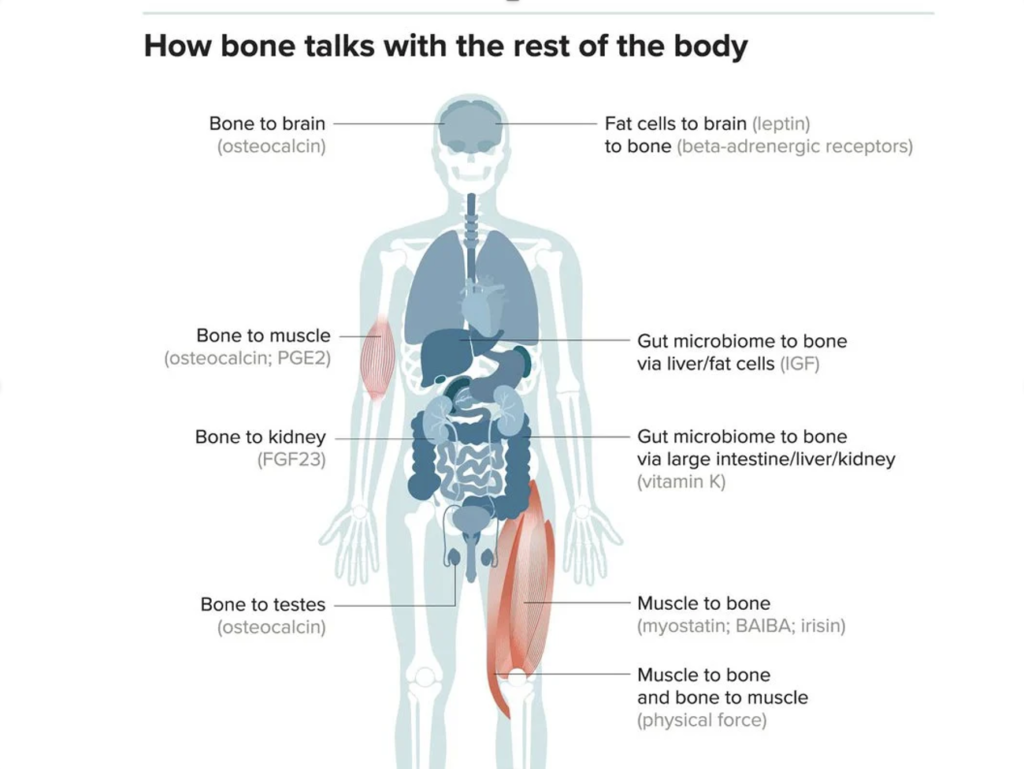
Even that’s not all they do. Over the past couple of decades, scientists have discovered that bones are participants in complex chemical conversations with other parts of the body, including the kidneys and the brain; fat and muscle tissue; and even the microbes in our bellies.

It’s as if you suddenly found out that the nails, screws and joists in your house were communicating with your kettle!

Scientists are still deciphering all the ways that bone cells can signal other organs, and how they interpret and respond to molecular messages coming from elsewhere. Already, physician-scientists are starting to consider how they might take advantage of these cellular conversations to develop new treatments to protect or strengthen bone.

The recent work has convinced scientists that bone is far more dynamic than once thought. Bone is not stone.

Early evidence that bone has something to say

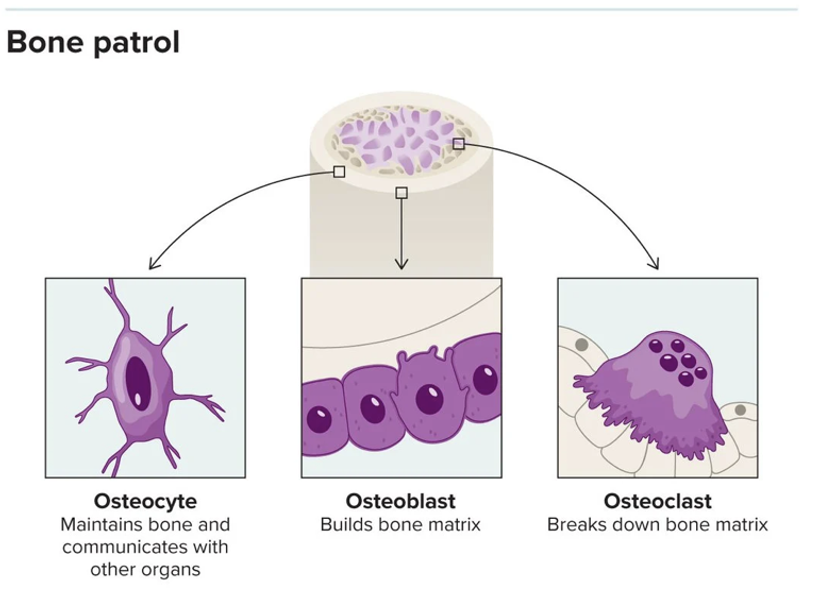
Bone is a unique tissue: It contains not only cells that build the hard matrix that gives the skeleton its strength, but also cells that break it down — enabling bone to reshape itself as a child grows, and to repair itself throughout life. The bone builders are called osteoblasts, and the disassembly crew consists of cells known as osteoclasts. When the balance between the actions of the two is off-kilter, the result is too little (or too much) bone. This happens, for example, in osteoporosis, a common condition of weak and brittle bones that results when bone synthesis fails to keep up with degradation of old bone.

In addition to osteoblasts and osteoclasts, bone contains another cell type, the osteocytes. While these cells comprise 90 percent or more of bone cells, they weren’t studied much until about 20 years ago, when a cell biologist named Lynda Bonewald (what’s in a name?!)  got interested. Colleagues told her not to waste her time, suggesting that osteocyctes probably only played some mundane role like sensing mechanical forces to regulate bone remodelling. Or maybe they were just kind of there, not doing much of anything.

Bonewald decided to investigate them anyway. Osteocytes do, in fact, sense mechanical load, as she and other researchers have found. But it turns out that they do so much more.She recently wrote about the importance of osteocytes to the kidneys, pancreas and muscles in the Annual Review of Physiology.

Three main cell types manage the constant remodelling of bone as it builds and disassembles itself in response to the body’s needs and resources.

Her first finding regarding osteocyte communication with other organs, reported in 2006, was that the cells make a growth factor called FGF23. This molecule then cruises the bloodstream to the kidneys. If the body has too much FGF23 — as happens in an inherited form of rickets — the kidneys release too much phosphorus into urine, and the body starts to run out of the essential mineral. The resulting symptoms include softened bones, weak or stiff muscles, and dental problems.

Around the same time that Bonewald was diving into osteocyte research, physiologist Gerard Karsenty began investigating a potential relationship between bone remodelling and energy metabolism. Karsenty suspected that the two would be related, because destroying and re-creating bone is an energy-intensive process.

In a 2000 study, Karsenty investigated whether a hormone called leptin could be a link between these two biological processes. Leptin is produced by fat cells and is best known as a depressor of appetite. It also emerged in evolution around the same time as bone. In experiments with mice, Karsenty found that leptin’s effects in the brain put the brakes on bone remodeling.

Using leptin in this way, Karsenty suggests, would have allowed the earliest bony creatures to suppress bone growth alongside appetite when food was scarce, saving their energy for day-to-day functions.

His group found support for this idea when they took X-rays of the hand and wrist bones of several children who lack fat cells, and thus leptin, due to a genetic mutation. In every case, radiologists unfamiliar with the people’s true ages ranked the bones as months or years older than they were. Without leptin, their bones had sped ahead, acquiring characteristics like higher density that are more typical of older bones.

That was a case of bone listening to other organs, but in 2007, Karsenty proposed that bone also has something to say about how the body uses energy. He found that mice lacking a bone-made protein called osteocalcin had trouble regulating their blood sugar levels.

In further research, Karsenty discovered that osteocalcin also promotes male fertility via its effects on sex hormone production, improves learning and memory by altering neurotransmitter levels in the brain, and boosts muscle function during exercise. He described these messages, and other conversations that bone participates in, in the Annual Review of Physiology in 2012.

It’s a spectacular set of functions for one molecule to handle, and Karsenty thinks they’re all linked to a stress response that early vertebrates — animals with backbones — evolved for survival. Bone may be an organ defining a physiology of danger.

Karsenty proposes that osteocalcin’s effects allowed early vertebrates, both male and female, to respond to the sight of a predator by amping up energy levels, through the effects of testosterone, as well as muscle function. They’d be able to run away, and later remember (and avoid) the place where they’d encountered that threat.

Researchers in Karsenty’s lab did these studies with genetically modified osteocalcin-deficient mice that he developed, and several labs have replicated his results in various ways. However, labs in the US and in Japan, working with different strains of mice that don’t make osteocalcin, didn’t see the same widespread effects on fertility, sugar processing or muscle mass. The scientists haven’t yet been able to explain the disparities, and the danger-response hypothesis remains somewhat controversial.

Whether or not osteocalcin played the big role in vertebrate evolution that Karsenty proposes, these studies have inspired other scientists to examine all kinds of ways that bone listens to and talks to the rest of the body.

Crosstalk between muscle and bone

Bone and muscle, partners in movement, have long been known to interact physically. Muscles tug on bone, and as muscles get stronger and larger, bone responds to this increased physical pull by becoming bigger and stronger too. That allows bone to adapt to an animal’s physical needs, so the proportional muscle and bone can continue to work together effectively.

But it turns out that there’s also a chemical conversation going on. For example, skeletal muscle cells make a protein called myostatin that keeps them from growing too large. In experiments with rodents, alongside observations of people, researchers have found that myostatin also keeps bone mass in check.

During exercise, muscles also make a molecule called beta-aminoisobutyric acid (BAIBA) that influences fat and insulin responses to the increased energy use. Bonewald has found that BAIBA protects osteocytes from dangerous byproducts of cellular metabolism called reactive oxygen species. In young mice that were immobilised — which normally causes atrophy of bone and muscle — providing extra BAIBA kept both bones and muscle healthy.


Both physical forces and chemical messengers help bone to communicate with other organs. The names of the relevant messengers are shown in parentheses.

In additional studies, Bonewald and colleagues found that another muscle molecule that increases with exercise, irisin, also helps osteocytes to stay alive in culture and promotes bone remodeling in intact animals.

The conversation isn’t all one-way, either. In return, osteocytes make prostaglandin E2, which promotes muscle growth, on a regular basis. They boost production of this molecular messenger when they experience an increase in the tug from working muscles.

What bone gets from the gut

The human body contains about as many microbial cells as human ones, and the trillions of bacteria and other microorganisms inhabiting the gut — its microbiome — function almost like another organ. They help to digest food and prevent bad bacteria from taking hold — and they talk to other organs, including bone.

So far, the bone-microbiome conversation seems to be one-way; no one has observed bone sending messages back to the microbes. But the skeleton can learn a lot of useful things from the gut. For example, suppose a person gets a nasty case of food poisoning. They need all their resources to fight off the infection. It’s not the time then to build bone.

The first hints of a bone-microbiome connection came from a 2012 study of mice raised in a sterile environment, without any microbes at all. These animals had fewer bone-destroying osteoclasts, and thus higher bone mass. Giving the mice a full complement of gut microbes restored bone mass to normal, in the short term.

But the long-term effects were a bit different. The microbes released molecules called short-chain fatty acids that caused the liver and fat cells to make more of a growth factor called IGF-1, which promoted bone growth.

Gut microbes also appear to moderate another signal that affects bone: parathyroid hormone (PTH), from the parathyroid glands at the base of the neck. PTH regulates both bone production and breakdown. But PTH can only promote bone growth if mice have a gut full of microbes. Specifically, the microbes make a short-chain fatty acid called butyrate that facilitates this particular conversation. (Incidentally, that FGF23 made by osteocytes also acts on the parathyroid glands, tuning down their secretion of PTH.)

While scientists have uncovered many important roles for the gut microbiome in recent years, it wasn’t a given that they’d influence the skeleton. Now it’s clear there are plenty of complex conversations occurring between bone cells and gut microbes, and researchers are just starting to explore that complexity and what it might mean for overall health.

Can doctors join the conversation?

The most thrilling thing about these organ-to-organ messages is that it suggests novel ways to help bone with medicines that act on different parts of the body.

The Centers for Disease Control and Prevention estimates that nearly 13 percent of Americans over 50 suffer from osteoporosis, and while there are several medications that slow the breakdown of bone, as well as some that speed buildup, they can have side effects and they’re not used nearly as much as they could be. That’s why new approaches are needed.

One obvious place to start is with the gut. Probiotics and other foods containing cultured microbes, such as the fermented milk kefir, can help to build a healthy microbiome. McCabe’s group found that a particular probiotic bacterium, Lactobacillus reuteri, protected mice from the bone loss that normally follows antibiotic treatment. Another group tried a combination of three types of Lactobacillus in post-menopausal women, the segment of the population most susceptible to osteoporosis, and those on the treatment experienced no bone loss during the yearlong study, whereas those in a placebo group did.

Hernandez has been investigating another therapeutic approach that would improve bone’s resilience, but not by adding mass or preventing breakdown. The work grew out of a series of experiments in which he used antibiotics to perturb, but not eliminate, the gut microbiome in mice. He predicted this would cause the mice to lose bone mass, but the results surprised him. It didn’t change the density or the size of the bone, but it changed how strong the bone was. The bones of the antibiotic-treated animals were weak and brittle.

Investigating further, Hernandez’s team found that when mice receive antibiotics, their gut bacteria stop making as much vitamin K as they normally do, and so less of the vitamin reaches the large intestine, liver and kidneys. The result is alterations to the precise shape of mineral crystals in the bone. Hernandez is now investigating whether the source of the vitamin K — either from gut microbes or dietary sources like leafy greens — matters for bone crystallization. If people need the bacterial version, then probiotics or even fecal transplants might help, he suggests.

Karsenty’s work, meanwhile, has inspired an entirely different strategy. As he observed early on, leptin from fat cells slows bone formation via the brain. In response to leptin, the brain sends a signal that ultimately activates bone cells’ beta-adrenergic receptors, shutting off bone-building osteoblasts and stimulating bone-clearing osteoclasts.

These same beta-adrenergic receptors exist in various parts of the body, including the heart, and drugs that block them are commonly used to reduce blood pressure. To investigate whether these drugs might also prevent osteoporosis, Khosla tested a few different beta blockers in 155 post-menopausal women, and two of the drugs seemed to keep bones strong. He’s now running a larger study with 420 women; half will receive one of those drugs, atenolol, and the other half will get a placebo, for two years. The scientists will monitor them for changes in bone density in the hip and lower spine.

Khosla has another idea, based on the fact that as bone ages, it accumulates old, senescent osteocytes that produce inflammation. That inflammation, in turn, can affect the constant buildup and breakdown of bone, contributing to their imbalance in osteoporosis.

Senolytics are drugs that cause those old cells to kill themselves, and Khosla recently co-authored a summary of their potential for the Annual Review of Pharmacology and Toxicology. In a study in older mice, for example, this kind of medication boosted bone mass and strength. Khosla has another trial going, with 120 women age 70 or older, to test the ability of senolytics to increase bone growth or minimize its destruction.

Scientists still have plenty to learn about the conversations between bone and the rest of the body. With time, this research may lead to more therapies to keep not just the skeleton, but also the other conversationalists, healthy and strong.

But what’s clear already is that the skeleton is not just a nice set of mechanical supports. Bones constantly remodel themselves in response to the body’s needs, and they’re in constant communication with other parts of the body. Bone is a busy tissue with broad influence, and it’s working behind the scenes during the most basic daily activities.

So the next time you enjoy a cup of yogurt, work out or even empty your bladder, be sure to spare a moment to thank your bones for responding to microbial signals, conversing with your muscles and keeping your phosphorus supplies from going down the drain.

REFERENCES:

The Osteocyte: New Insights. Alexander G. Robling and Lynda F. Bonewald. Annual Review of Physiology 2020 82:1, 485-506.

Feng, J., Ward, L., Liu, S. et al. Loss of DMP1 causes rickets and osteomalacia and identifies a role for osteocytes in mineral metabolism. Nat Genet 38, 1310–1315 (2006). https://doi.org/10.1038/ng1905

Leptin Inhibits Bone Formation through a Hypothalamic Relay. A Central Control of Bone Mass. P. Ducy et al. Cell, volume 100, issue 2, 197-207, JANUARY 21, 2000Open ArchiveDOI:https://doi.org/10.1016/S0092-8674(00)81558-5

Serum leptin level is a regulator of bone mass. F. Elefteriou et al.  PNAS, February 20, 2004 | 101 (9) | https://doi.org/10.1073/pnas.0308744101

Na Kyung Lee et al. Endocrine Regulation of Energy Metabolism by the Skeleton.

Endocrine Regulation of Male Fertility by the Skeleton. F. Oury ert al. Cell, volume 144, issue 5, 2011, pages 796-809.

Maternal and Offspring Pools of Osteocalcin Influence Brain Development and Functions. F. Oury et al. Cell, volume 155, issue 1,  pages 228-241, 2013.

Osteocalcin Signaling in Myofibers Is Necessary and Sufficient for Optimum Adaptation to Exercise. P. Mera et al. Cell Metabolism, volume 23, issue 6, pages 1078-1092, 2016.

Biology Without Walls: The Novel Endocrinology of Bone. G. Karsenty and F. Oury

Annual Review of Physiology 2012 74:1, 87-105.

Osteocalcin attenuates oligodendrocyte differentiation and myelination via GPR37 signaling in the mouse brain. Z.Qian et al.  Science Advances. 2021, volume 7, issue 43, eabi5811.

An osteocalcin-deficient mouse strain without endocrine abnormalities. C. R. Diegel et al. PLOS Genetics, May 28, 2020. https://doi.org/10.1371/journal.pgen.1008361

Osteocalcin is necessary for the alignment of apatite crystallites, but not glucose metabolism, testosterone synthesis, or muscle mass. T. Moriishi et al. PLOS Genetics.

May 28, 2020. https://doi.org/10.1371/journal.pgen.1008586

Bone and muscle: Interactions beyond mechanical. Marco Brotto, Lynda Bonewald. 

Bone, volume 80, 2015, pages 109-114.

Myostatin Mutation Associated with Gross Muscle Hypertrophy in a Child. M. Schuelke et al. New England Journal of  Medicine 2004, 350:2682-2688. 

DOI: 10.1056/NEJMoa040933.

β-aminoisobutyric Acid, l-BAIBA, Is a Muscle-Derived Osteocyte Survival Factor. Y. Kitase et al. Cell Reports. volume 22, issue 6, pages 1531-1544, 2018.

Irisin Mediates Effects on Bone and Fat via αV Integrin Receptors. H. Kim et al. Cell volume 175, issue 7, pages 1756-1768.E17, 2018.

Sender R, Fuchs S, Milo R (2016) Revised Estimates for the Number of Human and Bacteria Cells in the Body. PLoS Biol 14(8): e1002533. https://doi.org/10.1371/journal.pbio.1002533.

The gut microbiota regulates bone mass in mice. K. Sjögren et al. Journal of Bone and Mineral Research. 09 March 2012. https://doi.org/10.1002/jbmr.1588

Parathyroid hormone–dependent bone formation requires butyrate production by intestinal microbiota. J-Y Li et al. J Clin Invest. 2020, 130(4), 1767-1781. https://doi.org/10.1172/JCI133473

Probiotic Lactobacillus reuteri Prevents Postantibiotic Bone Loss by Reducing Intestinal Dysbiosis and Preventing Barrier Disruption. J. D. Schepper et alJournal of Bone and Mineral Research. 28 January 2019. https://doi.org/10.1002/jbmr.3635

New Clues in the Brain Linking Pain and Food

Posted Posted in Jayne's blog

It has long been known that there is an association between food and pain, as people with chronic pain often struggle with their weight. Finding pleasure in food comes from how our brain responds to what we are eating.

Researchers at the Del Monte Institute for Neuroscience may have found an explanation in a new study that suggests that circuitry in the brain responsible for motivation and pleasure is impacted when someone experiences pain. These findings may reveal new physiological mechanisms linking chronic pain to a change in someone’s eating behaviour. It is this change can lead to the development of obesity.

In a 2022 study researchers were looking at the brain’s response to sugar and fat. Using a gelatin dessert and a pudding dessert researchers altered the sugar, fat, and texture of the foods.

They found that none of the patients experienced eating behaviour changes with sugar, but they did with fat. Those with acute lower back pain who later recovered were most likely to lose pleasure in eating the pudding and show disrupted satiety signals – the communication from the digestive system to the brain – while those with acute lower back pain whose pain persisted at one year did not initially have the same change in their eating behaviour.

But chronic lower back pain patients did report that eventually foods high in fat and carbohydrates, like ice cream andbiscuits, became problematic for them over time and brain scans showed disrupted satiety signals.

This change in food liking did not however change their caloric intake. These findings suggest obesity in patients with chronic pain may not be caused by lack of movement but maybe they change how they eat.

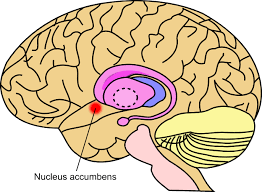
Brain scans of the study participants revealed that the nucleus accumbens – a small area of the brain mostly known for its role in decision-making – may offer clues to who is at risk to experience a long-term change in eating behaviour.

Researchers found the structure of this area of the brain was normal in patients who initially experienced changes in their eating behaviour but whose pain did not become chronic. However, patients whose eating behaviour was normal, but whose pain became chronic had smaller nucleus accumbens. Interestingly, the nucleus accumbens predicted pleasure ratings only in chronic back pain patients and in patients who became chronic after an acute bout of back pain suggesting that this region becomes critical in motivated behaviour of chronic pain patients. This tied in nicely with previous research by the same scientists in which they found that a smaller nucleus accumbens can indicate if someone is at a greater risk of developing chronic pain.


REFERENCES:

Lin Y, De Araujo I, Stanley G, Small D, Geha P (2022)

Chronic pain precedes disrupted eating behavior in low-back pain patients.

PLOS ONE 17(2): e0263527. https://doi.org/10.1371/journal.pone.0263527


Geha P, Dearaujo I, Green B, Small DM.

Decreased food pleasure and disrupted satiety signals in chronic low back pain.

Pain. 2014; 155(4):712–22. pmid:24384160.

Why Do You Drink Black Coffee? It’s In Your Genes!

Posted Posted in Jayne's blog

People who like to drink their coffee black also prefer dark chocolate, a new Northwestern Medicine study found. The reason is in their genes.

Scientists at Northwestern University have found coffee drinkers who have a genetic variant that reflects a faster metabolism of caffeine prefer bitter, black coffee. And the same genetic variant is found in people who prefer the more bitter dark chocolate over the more mellow milk chocolate.

The reason is not because they love the taste, but rather because they associate the bitter flavour with the boost in mental alertness they expect from caffeine.

The gene variants are related to the faster metabolism of caffeine rather than to taste. These individuals metabolise caffeine faster, so the stimulating effects wear off faster as well. Hence they need to drink more.

The scientists have interpretated the findings as these people equate caffeine’s natural bitterness with a psycho-stimulation effect. They learn to associate bitterness with caffeine and the boost they feel. This becomes a learned effect. When they think of caffeine, they think of a bitter taste, so they enjoy dark coffee and, likewise, dark chocolate.

The dark chocolate connection also may be related to the fact that dark chocolate contains a small amount of caffeine but predominantly theobromine, a caffeine-related compound, also a psychostimulant.

Why does this matter?

Coffee and dark chocolate consumption have been shown to lower the risk of certain diseases. Moderate coffee consumption ( two to three cups a day) lowers the risk of Parkinson’s disease, cardiovascular diseases, type 2 diabetes and several types of cancer. Dark chocolate appears to lower the risk of heart disease.


Currently, when scientists study the health benefits of coffee and dark chocolate, they must rely on epidemiological studies, which only confer an association with health benefits rather than a stronger causal link.

Cornelis’s new research shows these genetic variants can be used more precisely to study the relationship between coffee and health benefits. Previously, scientists were using the genetic markers for coffee drinkers in general. The new findings suggest they are stronger markers for particular types of coffee drinkers—black coffee drinkers. This impacts the interpretation of these genetic studies of coffee and health.

Drinking black coffee versus coffee with cream and sugar is very different for your health. The person who wants black coffee is different from a person who wants coffee with cream and sugar. Based on the findings, the person who drinks black coffee also prefers other bitter foods like dark chocolate. So these results are strating  to help drill down into a more precise way to measure the actual health benefits of this beverage and other food.

REFERENCES:

M.C. Cornelis and R.M. van Dam

Genetic determinants of liking and intake of coffee and other bitter foods and beverages.

Sci Rep 11, 23845 (2021).

https://doi.org/10.1038/s41598-021-03153-7


Are We So Attached To Rituals That We’re Not Prepared To Rethink Holiday Plans During COVID?

Posted Posted in Jayne's blog

Why do so many people refuse to change their holiday plans, even when such changes to the traditional holiday celebrations could save lives? Research from Harvard and Berkeley shows that major holidays like these are highly ritualised, and that disrupting rituals evokes moral outrage. Psychologically, it makes sense: rituals, more than any other behaviour, represent a group’s cherished values. When they are disrupted, it feels like those values are under attack, a threat that is met with defiance and even anger. Hence the surge in travel and willingness to attend in-person gatherings: rituals are just too important to be disrupted, even if it’s to reduce the numbers of COVID cases.

Rituals are different from other types of behaviour because they require two components: a prescribed set of rigid, repetitive behaviours that have to occur whenever there is a celebration (such as always eating turkey at Christmas, participating in a Seder on Passover, and decorating eggs with family on Easter), and a sense of meaning associated with those behaviours. In one of the studies, a sample of U.S. citizens was asked to rate the degree 15 different holidays (including Thanksgiving, Christmas and New Year’s Eve) meet these two properties of ritual: how rigid they are, and how much meaning the holiday carries.

The results showed that the more the holiday contained both of these features, the more participants were outraged when the holiday’s celebrations were altered. Moreover, the degree to which holidays included the rigid behaviours of ritual predicted outrage, above and beyond the meaning the holiday carries, indicating that it’s the altering of the physical rituals (and not just the degree of meaning) that triggers outrage.

Out of all holidays in the study, Thanksgiving, Christmas and New Year’s Eve, were rated the most ritualistic (in the case of New Year’s, this describes how uniform and rigid they are). This suggests that alterations to these holidays would be met with the greatest amount of resistance and a general refusal to follow restriction guidelines.

Take Thanksgiving, for example. It isn’t just about turkey and the fixings. It stands in people’s minds for all that is American—family values and national pride stemming all the way back to the anchoring of the Mayflower. As a result, mandated changes feel like a challenge to the very American values that the holiday has come to represent. The idea of not gathering for Thanksgiving, or altering the traditional rituals to which we’re accustomed, is shockingly irreverent to many millions of people.

In another study, Jewish participants were asked to imagine a series of changes to the traditional Passover Seder plate. Some of the alterations were major (changing many items on the plate) while other alterations were minor (changing only a few items on the plate). The researchers found that the major alterations produced comparable outrage as the minor alterations, indicating that even minor changes to rituals are not open to negotiation.

Simply put, our need for rituals is a matter of morals. While people feel comfortable applying cost-benefit analyses to things like changing the speed limit, moral values cannot be traded off for some other proposed benefit. For instance, in one of the studies, more than 90 percent of Jewish and Muslim participants reported that there was no amount of money that members of their religion would accept if it meant they could never practice the male circumcision ritual again, indicating individuals are insensitive to material gain when it comes to ritual practice.

Therefore, altering a ritual is simply not up for discussion. The more something is ritualistic—like Passover or Easter—the more it stands for the group’s most valued moral principles, the harder it is to alter the holiday celebrations without provoking deep outrage.

Even though lives are at stake—the lives of the very people we can’t imagine celebrating rituals without—many people continue to go forward with holiday traditions as they would in any other year. Since holiday rituals are deeply cherished, no amount of logical rationalisation can change people’s minds.Urging people to stay home and change their traditions for the reason that it will “save lives” or will “limit the spread of COVID” doesn’t seem to be effective enough. Perhaps we need to appeal to emotions, not facts. Recognising the moral value that people place on these rituals is a start. Then it’s about framing new holiday celebrations in a way that makes it seem that the meaning of the ritual isn’t being altered. With effective persuasive messaging, hopefully in the next few months we can return to our time-honoured traditions and we can be thankful that we are able to share them with our still-living families and loved ones.
Wherever you are in the world – stay safe, stay well and all the best for 2022!

REFERENCES:

* Stein DH, Schroeder J, Hobson NM, Gino F, Norton MI.

When alterations are violations: Moral outrage and punishment in response to (even minor) alterations to rituals.

J Pers Soc Psychol. 2021 Jan 25. doi: 10.1037/pspi0000352. PMID: 33492153.


* Ovul Sezer, Michael I. Norton, Francesca Gino, and Kathleen D. Vohs

Family Rituals Improve the Holidays

Journal of the Association for Consumer Research, Volume 1, Number 4, 2016.

What Was Your Name, Again?

Posted Posted in Jayne's blog

Studies show that people remember names better than faces, yet we’ve all experienced times when that’s simply not the case. Hopefully the tips here will help you better recall names, strengthen relationships, and avoid embarrassing moments.

It all starts with channelling your attention when you’re first introduced.

I’ve a friend (let’s call her Ellen) who moved house with her husband almost three years ago. One of the first people she met was a teacher who lived six doors away. Each time she saw my friend walking her two dogs, she’d wave and say, “Hello Ellen.” Ellen would smile, wave back, and say, “How are you?” or “How’s life?” After engaging in this almost daily ritual for so long, Ellen is too embarrassed to tell her friendly neighbour that she actually doesn’t know what she’s called…she can’t remember her name. Major embarrassement – going on for almost three years now.
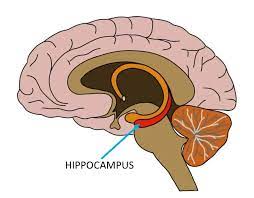
I seem to have been blessed with being able to remember names and faces. I wouldn’t go as far as to say that I’m a ‘super-recogniser’ – someone with exceptional face recognition abilities – but I do okay. As long as it’s ‘live’, as I’ve recently discovered. So I set out to discover how I do what I do naturally – and now apply it to those pesky online workshops.

You Know the Face, Why Not the Name?

There are studies that suggest we’re better at remembering names than faces. For some people that’s not true though – they’ll recognise a face, but not their name. It turns out that one of the reasons this happens is that you don’t give your brain a chance to process the information.

The hippocampus is key to our ability to take two things that are not associated in our minds and put them together. When you meet someone whose name and face aren’t previously associated in your mind, your hippocampus plays an important role in putting these things together into a single memory. That gives you the ability to know how to address the person.
The good news: Familiar names no longer depend on your hippocampus.

Identify Why It’s So Difficult to Retrieve Names

When you meet someone, you may be focused on impressing the person with your skill and expertise rather than learning more about them. You introduce yourselves and shake hands (or fist bump in the current Corona climate). But when you pass the person again at the event, why do you draw a blank?
According to Kevin Horsley, a grand master of memory and author of Unlimited Memory, one of the biggest problems is that people don’t actually hear the name. They’re not really concentrating because they’re trying to be interesting instead of trying to be interested.

The bottom line: Conjuring up a name is difficult when you haven’t taken the time to listen to it.

Go From Listening to Learning

When you study a new subject in school or prepare for a presentation at work, it takes time to learn the material. It’s unreasonable to assume you can learn the information once and be able to recall facts within minutes. Instead, you study and review the subject matter before a test or a meeting with a client. The same applies to meeting someone once and expecting their name to flash in your mind. This is often described as the “tip-of-the-tongue” phenomenon. You can’t remember the name because you never learned it properly. But….there are a few ways to improve your recall ability.

Focus on Retrieval

It’s easier to retrieve something you’ve pulled from your mind a short time before. One tip that the nueroscience research suggests is to go back to someone shortly after your first encounter. For example, while at a party, you could say, “Hello Jill,” and then two minutes later say, “I’m sorry, what did you say, Jill?” Sneaking in a bit of quick practice through repetition. This process is a predictor of whether or not you’ll know the name later. So even recalling the name once, whenever you can, goes a long way to helping you solidify it in your mind.

Search for Something Unique/Focus of Facial Features

Let’s say you meet a co-worker with a common name you’re confident you won’t forget. But when you pass the person in the corridor a few hours later, you’ve forgotten what they said. The problem may lie in not having made a ‘cognitive effort’. Then because you haven’t created the name in your mind, that’s going to be the one you forget.

So after you hear someone’s name, repeat it back. You could say, “Nice to meet you, Bill,” then give their name (first or last name) some meaning to help you attach their name and face to each other. Maybe Bill has a nose or mouth that looks like a duck’s bill… (Just don’t call him duck-face to his face….!) Grand Master Kevin Horsley recommends finding significance in a person’s name within a 20-second time frame after hearing it. Doing something creative and connecting that unusual image to the face can serve as a reminder for the next time you get together.

File Names and Notes Electronically in One Place

You could take it a step further – depending on how important it is to you – to make a few notes on someone you just met. It could be using Apple Notes on your iPhone, but Evernote, Google Keep, and Trello all work well. After you meet someone, enter their name, a few facts about the person (their profession, number of children), and where you met. If you do make a list though – remember to look at it often.

Use Social Media as a Reminder

Without moving into the realm of stalking, after you meet someone, you could ask to connect with them on social media.

LinkedIn is frequently used for business contacts, while Facebook and Instagram can provide more personal information. At least then you see the person’s name and profile picture together to help reinforce your memory.

 Change the Way You Think

While many conferences and business meetings remain online instead of in person, it’s a good opportunity improve your memory skills. With profile names clearly visible, it should be (should be…) easier to make a connection to a face during an online chat. And you could always make some funny connections to associate distinguishing features to names – and nobody will see. It’ll also help to pass the time if the workshop gets tedious ;=)

More importantly, consider changing your mindset. As with any skill, if you think you’re unable to master it, you may not make an effort to improve. Remember (haha) that there’s no such thing as a good or bad memory for names: there’s only a good or bad memory strategy.

And with that I’m off to look at what other online workshop I can register for that’ll not only be useful for my therapy credits but also to practice my name-to-face memory skills. That’s what I call a win-win, especially when I can make it fun for myself too.

REFERENCES:

Super-recognizers: People with extraordinary face recognition ability

Richard Russell, Brad Duchaine and Ken Nakayama.

Psychon Bull Rev. 2009 Apr; 16(2), pages 252–257.

doi: 10.3758/PBR.16.2.252

I recognise your name but I can’t remember your face: An advantage for names in recognition memory

A Mike Burton, Rob Jenkins, David J Robertson 

Q J Exp Psychol (Hove). 2019 Jul; 72(7), pages 1847-1854.

doi: 10.1177/1747021818813081.

Unlimited Memory: How to Use Advanced Learning Strategies to Learn Faster, Remember More and be More Productive

Kevin Horsley. 2016. TCK Publishing.