
DOWNLOAD THE ENTIRE OCTOBER 2015 NEWSLETTER including this month’s freebie.
“Awesome” has become a common descriptor, yet genuine awe is a profound emotion: the intake of breath at a starry night sky, a shiver down your spine during live music or a lump in your throat at the sight of a silent vast crowd holding candles aloft. Can this feeling make us better people? A recent paper in the Journal of Personality and Social Psychology suggests that it does.
Philosophers long ago suggested that awe binds people together. New research carried out at Professor Dacher Keltner’s lab in Berkeley proves that awe can make people less self-involved and more attuned to the needs of the larger group.
In the first of five studies, the researchers ascertained, through a representative national survey, that people who report feeling awe more often are, in fact, more generous. When given raffle tickets and offered the chance to donate some, those who frequently felt awe gave away more tickets.
Then the researchers conducted four other experiments in which they induced awe in some participants and other emotions such as pride or amusement in others. They evoked awe through videos of breathtaking natural scenes and by taking subjects outside to gaze upward at towering eucalyptus trees.
In every case, those who experienced awe behaved in what psychologists call a more “prosocial” way, being more helpful or making more ethical decisions. The participants who had gazed up at the trees, for example, picked up more pens that were “accidentally” dropped by an undercover researcher than other subjects outside who had gazed at a building.
By making us feel like a small part of something grander, awe shifts our attention from our own needs to those of the greater good. Some researchers have speculated that awe might have evolved as the response to a powerful leader. Maintaining social hierarchies and ensuring membership in a group can boost odds of survival.
One of the researchers suggests that people try keeping an “awe diary” for two weeks and every day soak up whatever evokes it—a sunset, a bird’s feathers. Shifting your focus toward something vast is can put your problems in perspective and open you to the greater world. It turns out that awe might also make it healthier too…..
Negative emotions have been linked to poor health outcomes, such as heart disease and even a shorter life span. Research suggests inflammation may be responsible for this link, at least in part. The molecules involved in inflammation are essential for our body’s response to infection and injury, but high levels over the long term have been linked to everything from diabetes to depression.
Few studies have assessed the health effect of positive emotions, so a team led by Jennifer Stellar of the University of Toronto (who also began studying awe in Keltner’s lab at Berkeley) conducted two studies to investigate the link. In the first, 94 students completed a questionnaire to determine how often they had experienced various emotions during the past month. The scientists then took a saliva sample to assess levels of a molecule that promotes inflammation called interleukin-6 (IL-6). They found more positive emotion was associated with lower levels of IL-6.
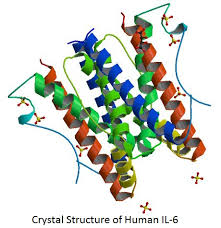 In the second experiment, 105 students completed online questionnaires designed to assess their tendency to experience several specific positive emotions. They later visited the lab to provide saliva samples. Joy, contentment, pride and awe were all associated with lower levels of IL-6, but awe was the only emotion that significantly predicted levels using a strict statistical test.
These results do not establish whether awe actually causes changes in IL-6 levels. In fact, the authors caution that the relation probably operates in both directions: having a healthier, less stressful life may allow a person to experience more awe. They point out that awe is associated with curiosity and desire to explore, which they contrast with the social withdrawal that often accompanies illness or injury. We know positive emotions are important for well-being, but these initial findings suggest they’re also good for our body.